Book Appointment Now


Escalator for Shopping Mall Pakistan: The Buyer’s Guide
An escalator in a shopping mall is not transport. It is a sales tool. The right escalator, placed correctly, walks every visitor past shopfronts they never planned to see and pulls foot traffic to the upper floors that developers struggle to rent. The wrong one creates a bottleneck at the entrance and leaves your top floor dead.
If you are planning an escalator for shopping mall Pakistan, whether a new plaza in Lahore or a retail center in Karachi, this guide covers the decisions that actually matter here. Not generic specifications copied from a factory catalogue, but the choices a Pakistani mall developer has to get right the first time.
Step 1: Match Step Width to Your Expected Foot Traffic
Escalator capacity is decided mostly by step width, and getting this wrong is the most expensive mistake in mall planning. There are two standard commercial widths, and each suits a different building.
A 800mm step width carries a single file of shoppers and suits boutique plazas and mid size retail centers. A 1000mm step width lets two people stand side by side, or one person with shopping bags, and is the standard for large malls where crowds peak on weekends and Eid shopping days. For a busy Pakistani mall, the wider step is almost always worth it, because a queue at the escalator mouth pushes shoppers back toward the exit.
Step 2: Choose the Right Layout, Because It Decides Your Revenue
This is the section no supplier catalogue explains, and it matters more than the machine itself. There are two ways to arrange a pair of escalators between floors.
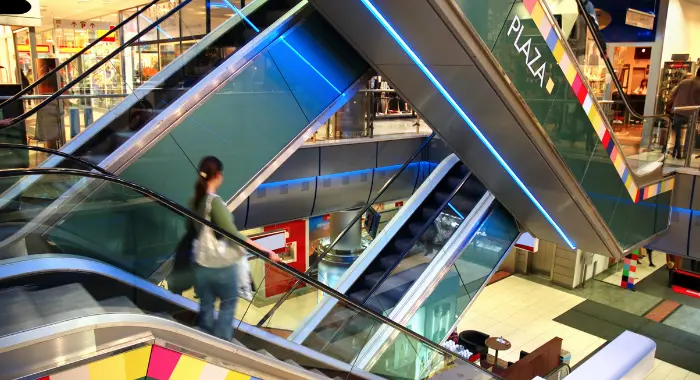
A parallel layout places up and down escalators side by side, so shoppers reach the next floor quickly. A criss cross, or herringbone layout, staggers them so a shopper stepping off must walk across the floor to reach the next escalator. That short walk is deliberate. It exposes visitors to more shopfronts on every level, a technique retail designers call forced flow, and it is why nearly every successful mall uses the criss cross arrangement. Choosing layout before construction, in coordination with your architect, is far cheaper than regretting it later.
Step 3: Plan for Pakistani Operating Conditions
A mall escalator here faces conditions that European catalogues never account for, and ignoring them shortens its life.
Dust ingress is the first. Pakistani cities carry heavy airborne dust that clogs step chains and comb plates, so escalators here need accessible cleaning points and a maintenance schedule tighter than the manual assumes. Voltage fluctuation is the second. Grid instability damages escalator control boards, so a voltage stabilizer is not optional in most cities. The third is peak load behavior. A escalator for shopping mall Pakistan can sit near idle on a weekday morning and run at full crush on a Saturday night, so the drive system must handle that swing without overheating.
Escalator For Shopping Mall Pakistan Specification Guide
| Specification | Recommended for Malls | Why It Matters Here |
|---|---|---|
| Step width | 1000mm for large malls, 800mm for plazas | Wider step clears weekend and Eid crowds without queuing |
| Incline angle | 30 or 35 degrees | 30 degrees is the international standard for comfort and safety |
| Speed | 0.5 m/s | Balances throughput with safe boarding for all ages |
| Layout | Criss cross (herringbone) | Forced flow exposes shoppers to more stores |
| Capacity | Up to 9000 persons per hour | Sized to your busiest hour, not your average |
| Rise | Floor to floor height | Confirmed during survey, not from a catalogue |
Step 4: The Safety Features That Protect Shoppers and Your Liability
An escalator carries children, elderly visitors and crowds, so safety is both an ethical duty and a legal one. Modern KOYO commercial escalators include a set of protections you should confirm are present: skirt brushes that keep clothing and feet away from the step edge, comb plate safety switches that stop the unit if an object jams, handrail entry guards, emergency stop buttons at both landings, and anti reversal devices that prevent an upward escalator from suddenly running backward under load. Safe design here follows principles set out by bodies such as OSHA for public equipment, and a reputable installer will walk you through each feature rather than hiding them in a spec sheet.
Step 5: Indoor or Semi Outdoor Installation
Many Pakistani plazas place escalators near open atriums or covered but unsealed entrances, which changes the specification. A semi outdoor escalator needs weather protected components and drainage in the truss, because rain and humidity reaching an indoor rated unit will corrode it within seasons. Tell your installer exactly where the escalator sits, because an indoor escalator in a semi exposed position is a warranty problem waiting to happen.
Why KOYO Escalators Suit Pakistani Malls
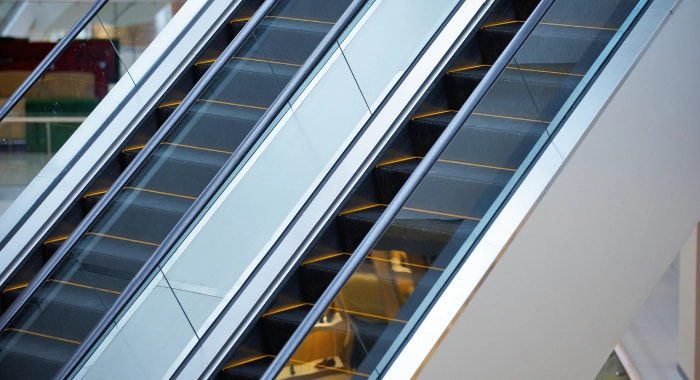
KOYO commercial escalators are engineered for continuous public use, with the same technology deployed in transit hubs and retail centers across more than 120 countries. For a Pakistani mall, that means auto lubrication systems that reduce servicing, self diagnostic controls that flag faults before they cause a shutdown, and energy saving modes that slow the escalator when no one is riding, a real saving given commercial electricity tariffs. Milano Technologies supplies, installs and maintains these units, so your escalator is supported locally rather than through a distant factory.
Plan Your Mall Escalator With a Free Site Survey
The right escalator starts with your building, your expected footfall and your floor layout. Milano Technologies installs KOYO commercial escalators in malls and plazas across Lahore, Islamabad and Karachi, advising on width, layout and capacity before a single unit is ordered.
Contact Us: Call or WhatsApp +92 347 7111104 to book a free site survey, and we will help you plan an escalator that moves crowds and lifts your upper floor sales.