Book Appointment Now

Airport Moving Walkway: How It Works and Why Airports Use It
Modern airports are designed to handle millions of passengers every year. With long terminals, multiple gates, and tight connection times, walking long distances can be exhausting for travelers. This is where the Airport Moving Walkway becomes an essential part of airport infrastructure.
Often called a travelator or moving sidewalk, the Airport Moving Walkway helps passengers move quickly and comfortably through terminals. These systems are widely used in major international airports as part of modern Passenger Conveyors & Moving Walkways systems to improve passenger flow, reduce congestion, and enhance the overall travel experience.
In this article, we’ll explore how Airport Moving Walkway systems work, why airports use them, their benefits, types, and safety features.
What Is an Airport Moving Walkway?
An Airport Moving Walkway is a mechanized conveyor platform designed to transport people across flat or slightly inclined surfaces. Unlike escalators that move vertically between floors, moving walkways transport passengers horizontally along long corridors.
These systems are commonly installed in:
- Airport terminals
- Long connecting corridors
- Security checkpoints
- Boarding gate areas
- Arrival and baggage claim sections
The purpose of an Airport Moving Walkway is simple: help passengers travel long distances faster without physical strain.
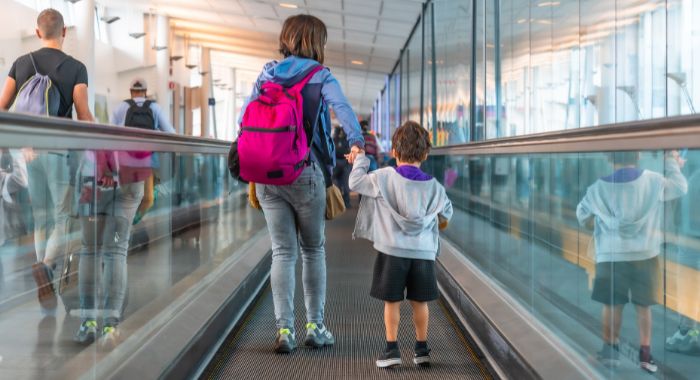
Passengers can either stand on the walkway and let it carry them forward or walk while the walkway moves, which significantly increases travel speed.
How Airport Moving Walkways Work
Although they appear simple, Airport Moving Walkway systems rely on sophisticated mechanical and electrical technologies that are also used in modern Passenger Conveyors.
1: Motor and Drive System
At the core of every moving walkway is a powerful electric motor. The motor drives a system of gears and rollers that move the walkway belt or metal pallets continuously.
The drive mechanism is usually installed beneath the floor structure to keep the surface smooth and safe for passengers using the Airport Moving Walkway.
2: Conveyor Belt or Pallet System
Most airport moving walkways use one of two surface systems:
- Rubber or composite conveyor belts
- Interlocking metal pallets
The surface moves in a continuous loop, similar to a conveyor belt. As the belt moves forward, it carries passengers along the walkway.
3: Rollers and Support Structure
Underneath the walkway are rollers and support frames that help the belt move smoothly. These rollers reduce friction and maintain consistent movement across the Airport Moving Walkway system.
4: Handrail Synchronization
The handrails move at the same speed as the walkway surface. This ensures that passengers holding the handrail remain stable while traveling.
The handrail system is powered by a separate drive mechanism but synchronized with the walkway motor.
5: Sensors and Safety Controls
Modern Airport Moving Walkway systems include multiple safety features such as:
- Emergency stop buttons
- Speed monitoring sensors
- Automatic shutdown systems
- Object detection sensors
These features help ensure the system stops immediately if an issue occurs.
Types of Airport Moving Walkways
Airports use different types of moving walkways depending on terminal layout and passenger traffic.
1: Horizontal Moving Walkways
These are the most common type found in airports. They operate on flat surfaces and help passengers move quickly across long corridors using an Airport Moving Walkway system.
2: Inclined Moving Walkways
Inclined moving walkways are designed for slight elevation changes. They are often used between floors where escalators may not be practical.
These walkways are common in areas where passengers push luggage carts, which cannot be used on escalators.
3: High-Speed Moving Walkways
Some modern airports use accelerating walkways that allow passengers to travel faster than traditional systems.
These walkways have:
- Entry zones with slower speeds
- Acceleration sections
- High-speed travel areas
They significantly reduce travel time between distant gates.
Why Airports Use Moving Walkways
Large airports can stretch over several kilometers, making walking between gates time-consuming. The Airport Moving Walkway solves several operational challenges and is an important part of large-scale Passenger Conveyors & Moving Walkways systems.
Improving Passenger Flow
Moving walkways help distribute passenger traffic efficiently throughout terminals. This reduces crowding in busy corridors.
Helping Travelers Catch Connections
Passengers with tight layovers can move much faster using an Airport Moving Walkway. This improves the chances of catching connecting flights.
Reducing Passenger Fatigue
Air travel already involves long waits, security checks, and walking. Moving walkways reduce physical strain, especially for:
- Elderly travelers
- Families with children
- Passengers carrying luggage
Supporting Accessibility
Airport Moving Walkway systems improve accessibility for people with limited mobility. While they are not a replacement for elevators or mobility assistance, they make travel easier.
Improving Airport Efficiency
Efficient passenger movement allows airports to manage large volumes of travelers without expanding corridor space.
Benefits of Airport Moving Walkways
Moving walkways provide advantages for both airports and passengers.
- Faster Travel Across Terminals: Passengers can cover long distances much faster compared to normal walking.
- Better Passenger Experience: Convenience and comfort improve the overall airport experience when using an Airport Moving Walkway.
- Reduced Congestion: Walkways help prevent crowd buildup in busy terminals.
- Energy Efficient Transportation: Compared to other transportation systems inside airports, Passenger Conveyors and moving walkways consume relatively low energy.
- Seamless Integration with Airport Design: Architects often integrate the Airport Moving Walkway directly into terminal layouts to guide passenger movement.

Safety Features in Airport Moving Walkways
Safety is a top priority in airport infrastructure. Modern walkways include multiple protective systems.
Key safety features include:
- Emergency stop buttons located along the walkway
- Comb plate sensors that detect trapped objects
- Handrail speed monitoring to ensure synchronization
- Anti-slip surfaces to prevent falls
- Side skirts that prevent objects from getting stuck
Regular inspections and maintenance ensure Airport Moving Walkway systems operate reliably.
Common Airport Moving Walkway Etiquette
To keep passenger traffic flowing smoothly, travelers are encouraged to follow simple etiquette rules when using an Airport Moving Walkway.
- Stand on the right side of the walkway
- Walk on the left side if moving faster
- Hold the handrail for stability
- Keep luggage secure
- Watch children carefully
Following these practices allows everyone to use the walkway efficiently.
Future Innovations in Airport Moving Walkways
As airports continue to grow, Airport Moving Walkway technology is evolving.
Future systems may include:
- Smart sensors for predictive maintenance
- Energy-efficient motors
- AI-powered traffic monitoring
- Faster acceleration systems
- Integration with smart airport infrastructure
These innovations will help airports move passengers even more efficiently in the future.
Conclusion
Airport Moving Walkways play an important role in modern airport infrastructure by helping passengers move quickly and comfortably across large terminals.
At Milano Technologies, we provide advanced passenger conveyors and moving walkways as part of our complete elevator and escalator solutions. Our systems are designed to deliver smooth performance, safety, and long-term reliability for airports, commercial buildings, and large public spaces.