Book Appointment Now

KOYO Elevator Installation in Islamabad: Complete Guide by Milano Technologies
Islamabad is growing upward. DHA Phase 6, Bahria Town, E-sector corporate towers, and Blue Area commercial plazas are all expanding vertically and with that growth comes one non-negotiable requirement for every multi-storey building: a certified, reliable elevator system engineered for long-term performance.
Milano Technologies is Pakistan’s authorized installer of KOYO elevator systems, serving Islamabad’s residential, commercial, healthcare, and industrial sectors from a dedicated office in I-9/3 Industrial Area. Every installation Milano delivers follows KOYO’s international engineering standards from initial site survey and shaft specification through to full commissioning, handover, and ongoing maintenance. This is not a general lift supply service. It is a complete, certified KOYO elevator installation managed end-to-end by a single engineering team.
Why Islamabad Building Owners Should Plan KOYO Elevator Installation Before Construction Completes
The most expensive mistake any building owner in Islamabad can make is treating elevator installation as an afterthought. Retrofit projects where the shaft must be cut into an existing finished structure require excavating completed floors, breaking into finished walls, and often reinforcing a structure that was not designed to support a hoistway. That scope adds significant cost and timeline to any project.
The Pakistan Engineering Council (PEC) and Islamabad Capital Territory (ICT) building codes require accessible vertical transportation in multi-storey commercial buildings. Residential buildings of four or more floors are increasingly expected to meet the same standard, particularly in gated communities like DHA and Bahria Town where developers are bound to provide specified facilities.
Planning the elevator shaft as part of original construction with KOYO’s precise civil specifications provided by Milano’s engineers before walls are poured eliminates costly rework and allows the correct system to be specified from the beginning rather than reverse-engineered around an existing structure.
KOYO Elevator Models Available for Installation in Islamabad
Milano Technologies installs the complete KOYO range across all property types in Islamabad. The right model for your building depends on floor count, usage intensity, passenger load, shaft dimensions, and architectural requirements. Milano’s engineers assess each site individually before recommending a system there is no one-size-fits-all configuration.
- KOYO Low-Noise Passenger Elevator The standard choice for commercial office buildings, residential towers, clinics, and mixed-use plazas across Islamabad’s Blue Area, F-sector, and Bahria commercial zones. Features VVVF (Variable Voltage Variable Frequency) drive technology for energy-efficient, whisper-quiet operation suited to professional environments.
- KOYO Machine Room (MR) / Machine Room-Less (MRL) Elevator The MRL configuration is the preferred solution for new construction projects across Islamabad where overhead space is limited or machine rooms are architecturally undesirable. By integrating drive components within the hoistway, MRL eliminates the need for a separate machine room reducing civil costs and giving architects maximum floor plan flexibility. Both MR and MRL configurations are available based on building height and structural design.
- KOYO Home Elevator (Villa Series) Designed specifically for private residences, duplex homes, and luxury villas the building type that defines DHA Islamabad and Bahria Town residential neighborhoods. Features a compact shaft footprint allowing installation within existing staircases or along exterior walls without disrupting interior design. Available for both new construction and retrofit projects in existing homes.
- KOYO Intelligent Stability Medical Elevator Purpose-built for hospitals, clinics, and healthcare facilities where smooth acceleration, precise floor leveling, and 24/7 operational reliability are essential. The integrated Data Network Adaptive Control System manages elevator dispatching intelligently based on real-time demand critical in high-traffic healthcare environments. Available in Machine Room (TBJ) and Machine Room-Less (TBJW) configurations.
- KOYO High-Accuracy Freight Elevator Engineered for warehouses, factories, hospitals, and commercial buildings requiring high-load vertical transport with precision positioning. Built for intensive use with reinforced cabin construction and load-bearing systems calibrated to industrial standards.
- KOYO Panoramic Elevator Glass-cabin elevators for hotels, shopping malls, luxury commercial lobbies, and high-end mixed-use developments. Custom cabin configurations are available based on architectural and interior design requirements.
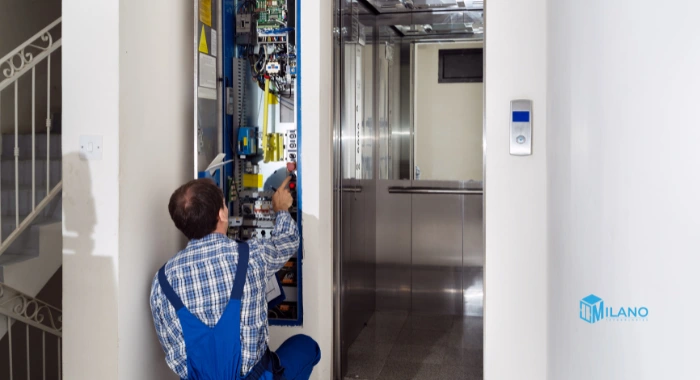
The KOYO Installation Process: What Milano Technologies Manages in Islamabad
Understanding the full installation process helps building owners hold their contractor accountable at every stage and avoid the delays and cost overruns that characterize poorly managed projects in Islamabad.
- Stage 1 — Site Survey and Technical Assessment A Milano engineer visits your building before any equipment is ordered to assess shaft dimensions, pit depth, overhead clearance, power supply specifications, and structural suitability. For passenger elevators, standard pit depth requirements range from 200mm to 1,500mm depending on the model. Minimum overhead clearance above the top floor is 2,300mm to 3,000mm. This stage determines the correct KOYO model, configuration, and civil requirements for your specific building.
- Stage 2 — Shaft Civil Specification and Construction Milano provides your civil contractor with exact shaft dimensions and structural requirements before construction begins. Standard passenger elevator shafts require a minimum 1.5 to 2 meters width and at least 2.5 meters depth. If the shaft already exists, Milano’s engineers verify the dimensions against KOYO’s specifications before equipment is dispatched.
- Stage 3 — Equipment Import and Customs Clearance KOYO systems are manufactured internationally and imported to Pakistan. Milano manages the full import process — documentation, customs coordination, and logistics from origin to site. Islamabad-based buyers should plan for a lead time of 4 to 10 weeks from order confirmation to equipment arrival, depending on the system and shipping origin. Milano keeps clients informed at every stage of this process.
- Stage 4 — Mechanical and Electrical Installation Guide rails are installed inside the shaft first, followed by the KOYO drive system, cabin, control panels, safety devices, and landing doors at each floor. Electrical connection is made to a dedicated three-phase power circuit. Given Islamabad’s WAPDA outage frequency, Milano strongly recommends incorporating a UPS or generator backup circuit into the electrical specification at this stage — it is far cheaper to include at installation than to add later.
- Stage 5 — Testing, Commissioning, and Handover Before handover, every KOYO installation undergoes comprehensive load testing, speed calibration, and safety system verification. This covers emergency braking, door sensor response, overload alarms, and inter-floor stopping accuracy. A commissioning certificate is issued, and building management receives a formal handover including usage guidance and emergency procedure documentation.
What Determines Your KOYO Installation Cost in Islamabad
Milano Technologies does not apply standard price lists because no two KOYO installations are identical. Every project’s cost is determined by the specific combination of factors that define that building and that system.
| Cost Factor | What It Affects |
|---|---|
| Building type and floor count | Determines the KOYO model series, capacity, and drive system required |
| Elevator model and passenger capacity | Base system specification and component configuration |
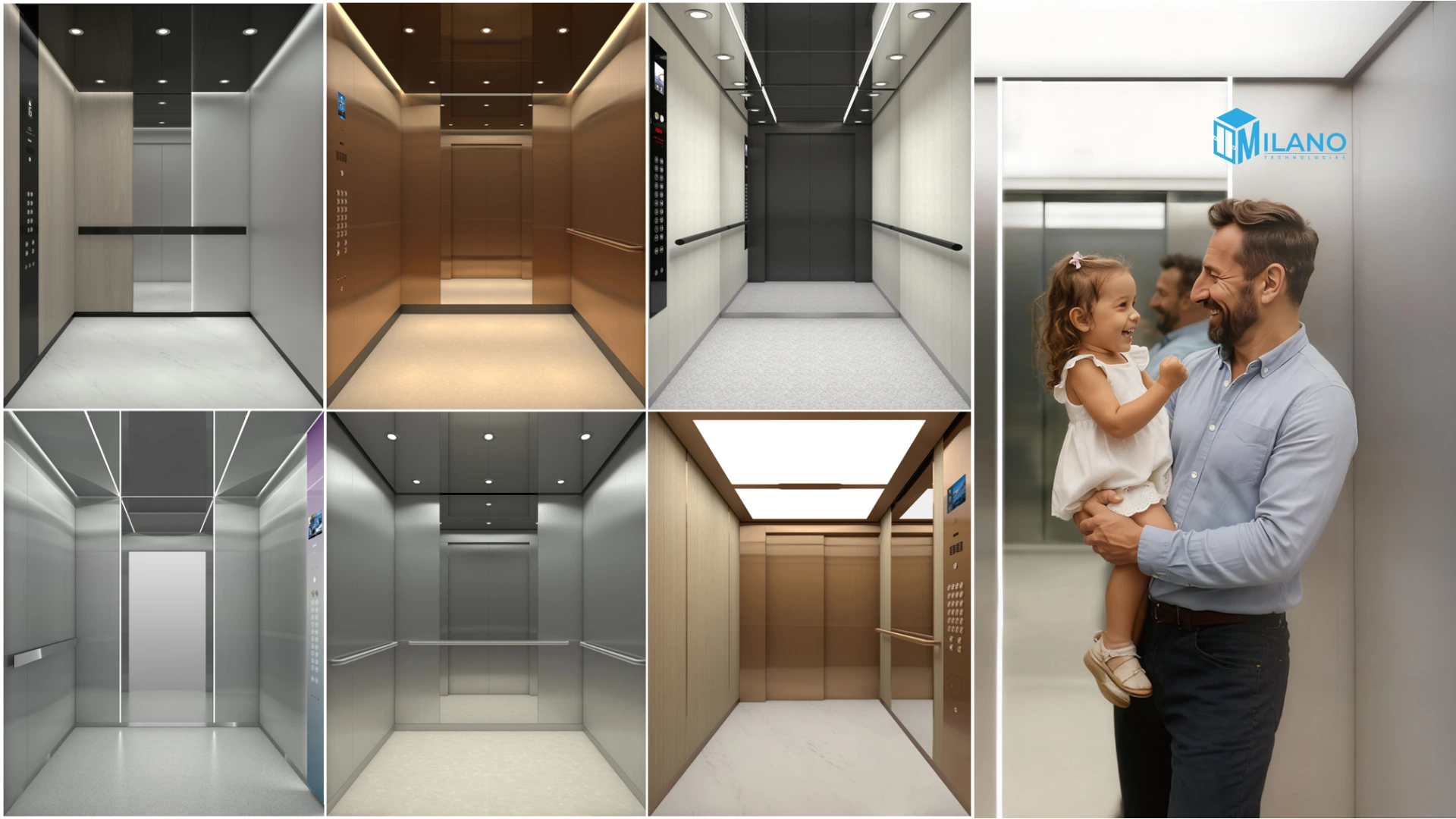
| Cabin finish and customization | Standard versus premium interiors, panel materials, lighting, and flooring |
| Shaft construction scope | Whether the shaft exists and is correctly dimensioned, or needs civil work |
| WAPDA backup provision | UPS or generator circuit inclusion affects electrical scope |
| AMC structure and response terms | Annual maintenance contract terms, visit frequency, and response commitments |
After completing the free site assessment, Milano provides a fully itemized, transparent project quote with no additions after signing. Islamabad projects carry a slight logistics overhead compared to Lahore due to supply chain routing — a factor Milano accounts for in the initial quote rather than introducing as a late addition.
Islamabad-Specific Factors That Affect Every KOYO Installation
Several variables apply specifically to Islamabad that do not affect projects in other cities. Milano’s Islamabad team accounts for all of these from the start.
- ICT regulatory compliance — Buildings in Islamabad Capital Territory are governed by ICT building codes and PEC requirements for commercial vertical transportation. Milano’s engineering teams are familiar with both frameworks and ensure every installation is compliant from the permit stage.
- DHA and Bahria Town project standards — Gated community developments in Islamabad carry developer-imposed specifications for elevator systems. Milano has experience working within these requirements and can advise on the correct KOYO configuration for community-standard compliance.
- WAPDA supply variability — Islamabad experiences regular power outages. KOYO’s VVVF drive systems provide inherent protection against voltage fluctuation, and Milano recommends UPS or generator backup specification at the design stage for buildings where daily elevator use is essential.
- Import lead times via Islamabad’s supply chain — Equipment routed through Islamabad’s supply chain carries a moderate lead time overhead. Milano factors this into the project timeline from the outset and manages customs documentation entirely.
Questions to Ask Any Elevator Company Before Signing in Islamabad
Whether you are evaluating Milano Technologies or any other provider, these questions protect your investment and expose whether a company genuinely knows Islamabad’s market:
- Are you an authorized installer for this elevator brand, or a third-party assembler?
- Do you provide KOYO-specific civil specifications before construction begins, or after?
- What is the lead time from order confirmation to equipment arrival, and do you manage customs clearance directly?
- Does your quote include civil shaft work, or is that a separate contractor’s responsibility?
- What international safety certifications does this elevator model carry, and can you provide documentation before contract signing?
- Are your post-installation servicing technicians your own staff or subcontracted?
- What is your guaranteed emergency breakdown response time under the AMC, and what is the contractual remedy if it is not met?
A company that gives vague answers on questions two, three, or six has not managed enough Islamabad projects to handle yours without surprises.
Milano Technologies: Authorized KOYO Elevator Installer in Islamabad
Milano Technologies operates from its Islamabad office at Office #7, Plot #277, Street #1, I-9/3 Industrial Area — staffed by engineering teams with direct knowledge of Islamabad’s building environment, ICT permit landscape, and supply chain conditions.
Every KOYO installation in Islamabad follows the complete Milano process: site survey and civil specification, permit coordination, equipment import and customs management, certified installation, full load testing and commissioning, formal handover, and long-term AMC support — all delivered by the same Milano team, not subcontracted.
If you are planning a KOYO elevator installation in Islamabad — whether for a private villa in DHA or Bahria Town, a commercial office in Blue Area or F-7, a healthcare facility, or a residential apartment tower — contact Milano Technologies for a free site assessment and a fully transparent, custom project quote.
Milano Technologies Islamabad Office Office #7, Plot #277, Street #1, I-9/3 Industrial Area, Islamabad 📞 +92 347-711-1104 ✉ info@milano.p