Book Appointment Now

MRL Elevator vs Hydraulic Elevator: Which Is Better for Pakistan?
Walk into any new high-rise in Lahore’s DHA or Karachi’s Clifton, and chances are you will find a machine room-less (MRL) elevator humming quietly behind those sleek doors. Yet dozens of older plazas and low-rise buildings across Pakistan still rely on hydraulic lifts. Both systems work. But in Pakistan’s unique mix of load-shedding, extreme heat, and fast-growing vertical construction, the wrong choice costs building owners dearly for decades.
This guide gives you the unfiltered, technical comparison so you can decide with confidence.
What Most Guides Miss: How Each System Actually Works
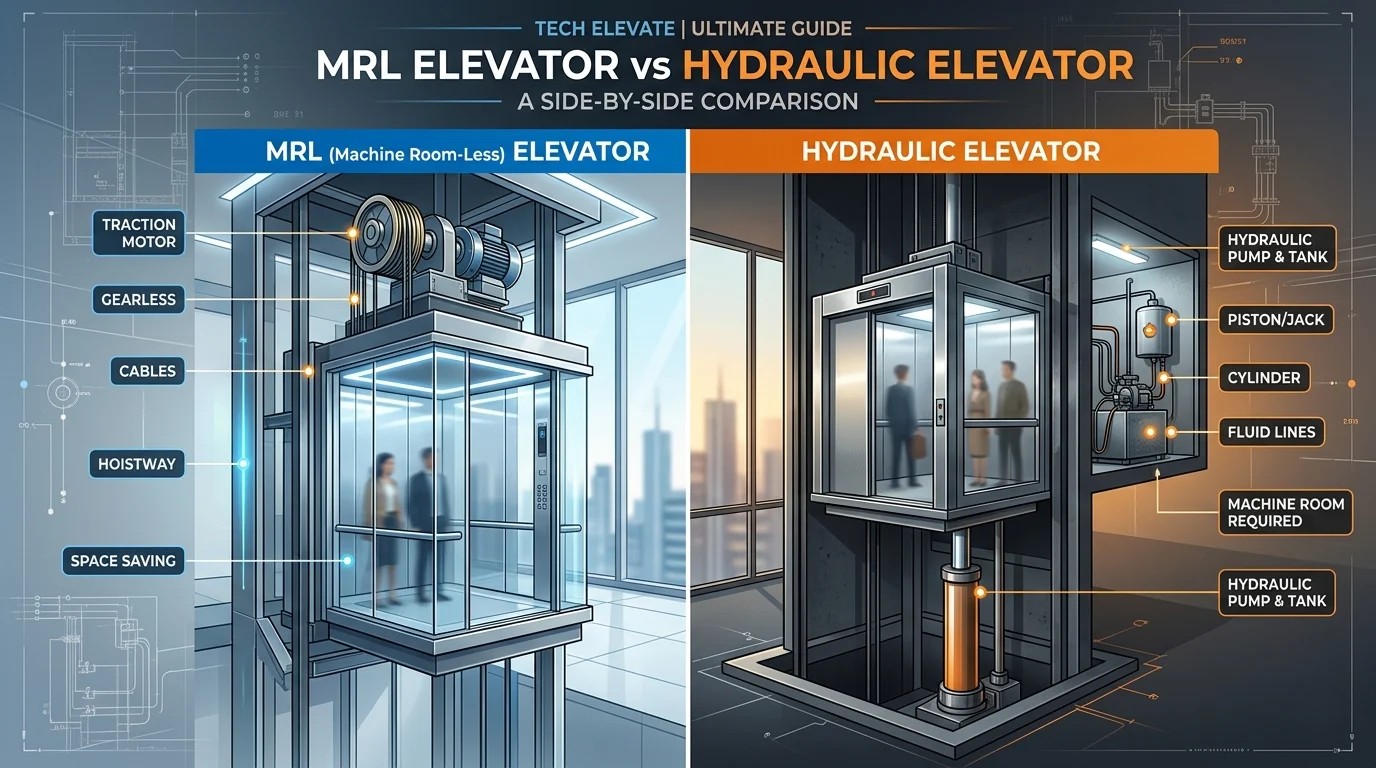
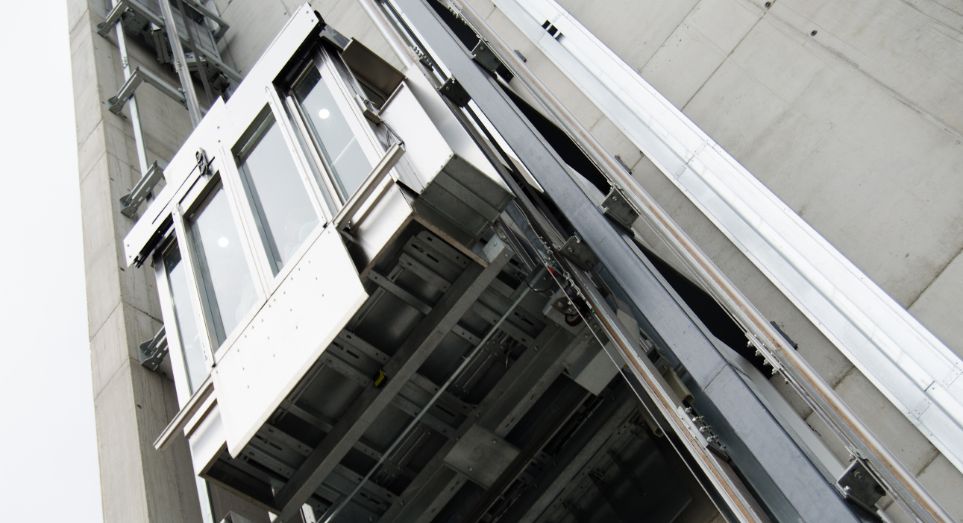
An MRL elevator (machine room less elevator) uses a compact gearless traction motor mounted inside the hoistway itself, directly above or beside the car. There is no separate machine room required. The drive system uses a Variable Voltage Variable Frequency (VVVF) controller that adjusts power draw in real time, which is the single biggest reason MRL units consume 30 to 40 percent less electricity than older traction systems.
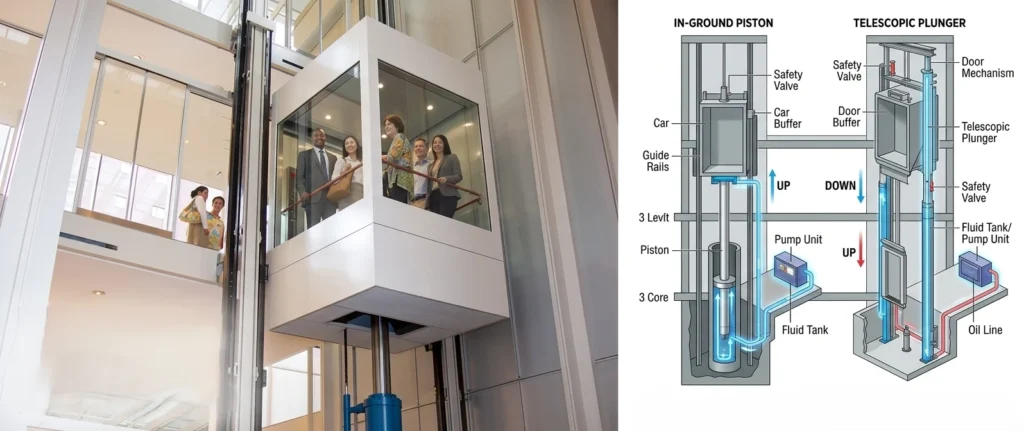
A hydraulic elevator works on a completely different principle. An underground piston, pushed by pressurized oil from an electric pump unit, lifts the cab from below. The pump unit sits in a small machine room at the base of the shaft. When the cab descends, gravity does the work and oil flows back into the reservoir. Simple in concept but carrying hidden costs in Pakistan’s context.
MRL vs Hydraulic Elevator: Side-by-Side Comparison
The table below is built from manufacturer technical specifications, energy studies, and on-ground feedback from elevator contractors operating in Karachi, Lahore, and Islamabad.
Factor | MRL Elevator | Hydraulic Elevator |
Energy Consumption | 30 to 40% lower (VVVF drive) | Higher; pump runs on every ascent |
Maximum Travel Height | Up to 30+ floors | Typically 2 to 6 floors (direct hydraulic) |
Machine Room Required | No | Yes (small, at base level) |
Speed | 1.0 to 2.5 m/s | 0.15 to 0.63 m/s |
Oil Leak Risk | None | Present; requires regular seal checks |
Performance in High Heat | Excellent (motor inside hoistway, ventilated) | Overheating risk in summer above 45°C |
Load-Shedding Recovery | UPS-compatible, smooth restart | Pump restart can cause hydraulic surge |
Maintenance Cost (annual est.) | PKR 60,000 to 120,000 | PKR 40,000 to 90,000 |
Initial Installation Cost | Higher by 15 to 25% | Lower upfront |
Ideal Building Type | Mid to high-rise, commercial, residential | Low-rise, 2 to 4 floors, villas |
Environmental Impact | No hydraulic fluid risk | Oil disposal and leak hazard |
Resale or Tenant Appeal | High (modern perception) | Moderate |
Pakistan’s Power Crisis Makes This an Energy Decision, Not Just an Elevator Decision
This is where the MRL vs hydraulic elevator debate becomes sharply local. Pakistan’s average commercial electricity tariff crossed PKR 60 per unit in 2024, according to NEPRA’s quarterly reports. A hydraulic elevator running 8 to 10 hours daily in a five-story plaza can consume 18 to 22 kWh per day. The same building with an MRL unit typically uses 11 to 14 kWh for identical trips.
Over a 12-month cycle, that gap translates to PKR 100,000 to 180,000 in extra electricity costs for a hydraulic system. The higher upfront cost of MRL typically recovers itself within 3 to 5 years purely through energy savings, before even accounting for UPS compatibility or oil maintenance costs.
Heat Is a Silent Killer for Hydraulic Elevators in Pakistani Summers
Hydraulic oil has an optimal operating temperature range of 25°C to 55°C. In cities like Multan, Sukkur, and Hyderabad, ambient temperatures regularly breach 45°C in June and July. When the machine room heats up, hydraulic oil viscosity drops, seals wear faster, and pressure regulation becomes inconsistent. The result is uneven floor leveling, slow door response, and in severe cases, unexpected cab drift.
MRL elevators, by contrast, use regenerative drives and ventilated hoistway designs specifically built for variable ambient conditions. Their motors generate less heat and the VVVF system compensates electronically rather than relying on fluid mechanics.
Building Height: The Line That Ends the Debate for Most Projects
If your building is five stories or fewer, a hydraulic elevator remains a legitimate option, particularly where shaft space is tight and budget is the primary constraint. The lower installation cost and simpler mechanical design mean fewer components to fail.
For any building above five floors, hydraulic elevators are not the right choice, regardless of price. Direct hydraulic systems lose efficiency rapidly with increased travel distance, and roped hydraulic systems add complexity that erodes any cost advantage. MRL traction elevators are the industry standard for mid-rise and high-rise buildings globally, and this holds true for Pakistani commercial and residential towers above five floors.
Maintenance Reality: What Contractors in Pakistan Actually Report
Speaking with elevator maintenance companies operating in Punjab and Sindh reveals a clear pattern. Hydraulic systems require oil top-ups every 6 to 12 months, seal replacements every 2 to 3 years, and periodic hydraulic unit flushing. Disposing of used hydraulic oil in compliance with environmental guidelines adds a hidden cost most building owners ignore at installation time.
MRL elevators require motor brake adjustments, rope tension checks, and controller firmware updates. These are predictable, schedulable tasks. Emergency call-outs for MRL units in Pakistan are notably less frequent compared to hydraulic units, particularly during summer when thermal stress on hydraulic systems peaks.
Which Is Better for Pakistan? The Honest Answer
For the majority of buildings being developed in Pakistan today, MRL elevators are the better long-term investment. The combination of lower energy consumption, no hydraulic oil risk, superior heat tolerance, and compatibility with UPS systems for load-shedding conditions makes the MRL traction elevator the smarter choice for any building above three floors.
Hydraulic elevators still have a valid role in budget-conscious, low-rise projects such as private bungalows converted for accessibility, small office buildings below four floors, or developments where the shaft cannot accommodate the counterweight system of an MRL unit.
The right answer is always building-specific. But if you are building for the long term, the MRL elevator wins on total cost of ownership every time in Pakistan’s operating environment.
Make the Right Choice for Your Building with Milano Technology
At Milano Technology, we have installed and maintained elevator systems across Pakistan’s most demanding commercial and residential projects. Whether you are evaluating an MRL elevator for a new tower or reconsidering a hydraulic lift for a low-rise project, our team conducts a full site assessment and provides transparent cost comparisons before you commit to anything.
Contact Milano Technology today for a free elevator consultation tailored to your building’s height, usage load, and budget. Let us help you choose a system that saves energy, reduces maintenance headaches, and delivers reliable vertical mobility for decades ahead.