Book Appointment Now

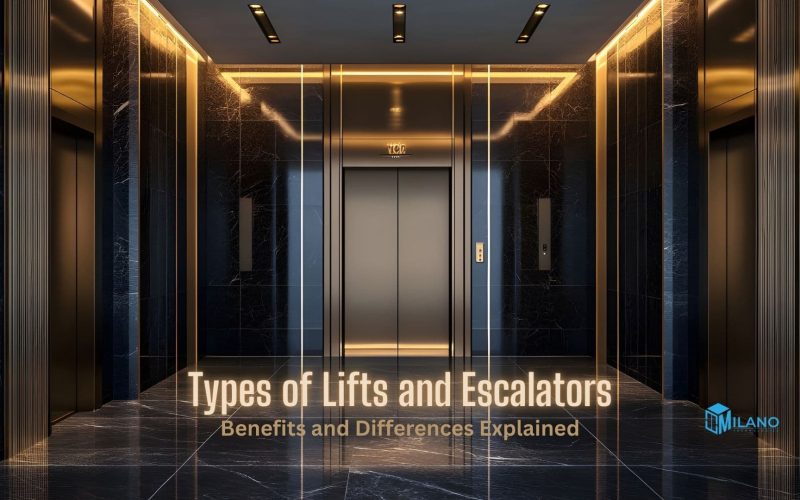
Lifts and escalators play an essential role in modern buildings by providing safe and efficient transportation between floors. From residential apartments and office buildings to shopping malls and airports, these systems improve accessibility and convenience. Understanding the different types of lifts and escalators along with their benefits and differences helps building owners and users choose the right solution for their needs.
While lifts and escalators both move people between levels, they operate differently and are used in different environments. This guide explains the main types of lifts and escalators, their advantages, and key differences in a simple and easy-to-understand way.
When exploring the types of lifts and escalators, it is important to know how each system functions. Lifts (also known as a lift elevator system) transport passengers vertically inside an enclosed cabin, while escalators move people continuously on a motorized staircase.
Both systems are essential in modern construction because they improve mobility and reduce the effort required to move between levels. The choice between elevator and escalator systems depends on building design, available space, and traffic volume.

Among the various types of lifts and escalators, lift systems are designed to meet different structural and operational requirements. Each type offers unique benefits and applications.
Passenger lifts are the most widely used type in residential and commercial buildings. They are designed to transport people comfortably and safely between floors.
Benefits of Passenger Lifts
These lifts are commonly installed in apartments, offices, and hotels.
Hydraulic lifts use fluid pressure and a piston mechanism to move the lift cabin. They are typically used in low-rise buildings because of their simple and cost-effective design.
Benefits of Hydraulic Lifts
They are commonly used in small commercial buildings and private residences.
Traction lifts operate using steel cables and a counterweight system connected to a motor. They are frequently used in mid-rise and high-rise buildings.
Benefits of Traction Lifts
They are ideal for office towers and large residential complexes.
Machine Room-Less lifts are modern systems that do not require a separate machine room. When comparing MRL vs MR Elevators, MRL systems save space because the machinery is installed within the shaft, while MR (Machine Room) elevators require a dedicated room for equipment.
Benefits of MRL Lifts
These systems are becoming increasingly popular in commercial and residential projects.
Goods lifts are designed to transport heavy loads rather than passengers. They are widely used in industrial and commercial environments.
Benefits of Goods Lifts
They are often installed in warehouses, factories, and large retail stores.
Escalators are an important part of the broader types of lifts and escalators, especially in buildings with high pedestrian traffic. They allow continuous movement between floors without waiting time.
Parallel escalators are installed side by side, with one moving upward and the other downward. Many modern Commercial Escalator installations use this configuration in shopping malls and office complexes.
Benefits of Parallel Escalators
In large public infrastructure projects, Transit Escalators are often installed in metro stations, railway terminals, and airports to manage heavy passenger traffic efficiently.
Crisscross escalators are arranged in a zigzag pattern between floors. They are often seen in shopping centers and department stores where visibility and space optimization are important.
Benefits of Crisscross Escalators
Spiral escalators follow a curved path and are often installed in architecturally unique buildings where aesthetics play a key role.
Benefits of Spiral Escalators
When evaluating the types of lifts and escalators, lifts offer several advantages in residential and commercial settings:
Lifts are essential for accessibility and convenience in modern infrastructure.
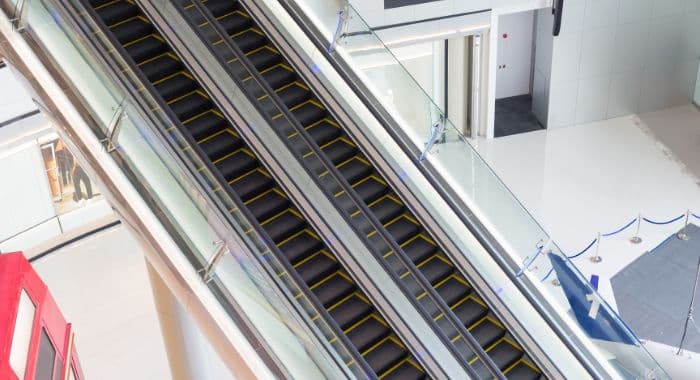
Escalators are designed to efficiently handle large volumes of people. In commercial environments, a well-designed commercial escalator system ensures smooth crowd management.
They are especially useful in airports, malls, and transit stations.
Understanding the differences between lifts and escalators is a key part of learning about the types of lifts and escalators and selecting the right system.
Lifts:
Escalators:
Choosing Between Types of Lifts and Escalators
The decision to install a lift elevator system, escalator, or both depends on several factors. In many commercial projects, combining elevator and escalator systems ensures maximum efficiency.
Large complexes often use a combination of solutions to optimize passenger movement.
Understanding the various types of lifts and escalators along with their benefits and differences makes it easier to choose the right vertical transportation system. Whether selecting Transit Escalators for public infrastructure or deciding between MRL vs MR Elevators for a commercial building, each option offers unique advantages.
Both lifts and escalators play a crucial role in modern construction by improving accessibility, convenience, and overall building efficiency.