Book Appointment Now

Capsule Lift Price in Pakistan: Everything You Need to Know Before Buying
Panoramic glass capsule lifts have moved from being a five-star hotel feature to a realistic option for homes, plazas, and commercial buildings across Lahore, Karachi, and Islamabad. But before you start comparing quotes, there is one thing almost no supplier tells you upfront: the gap between a locally assembled capsule lift and a properly engineered KOYO premium unit is not just about looks. It is about safety certification, glass quality, drive technology, and what happens five years after installation.
This guide breaks down what actually drives capsule lift cost in Pakistan, how local assembly compares with KOYO premium engineering, and what questions to ask before you sign a contract.
What Is a Capsule Lift and Why It Costs Differently Than a Standard Cabin Lift
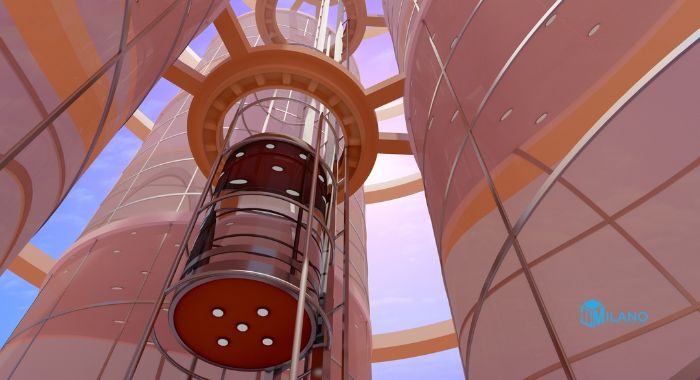
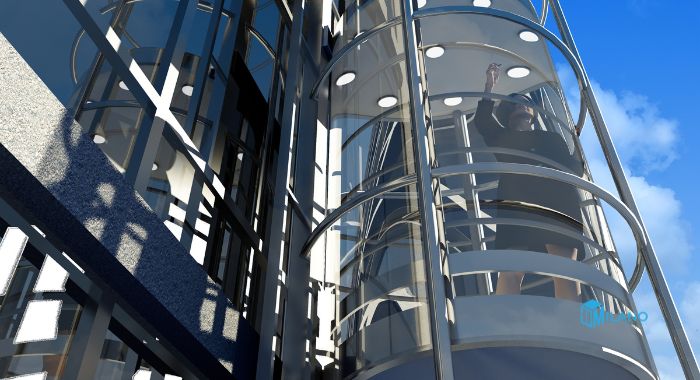
A capsule lift uses a fully or partially glazed cabin, often mounted on an external or atrium-facing structure, so riders get a 360 degree or panoramic view as they travel between floors. Unlike a standard enclosed steel cabin lift, a capsule lift carries extra engineering load on three fronts: structural glass strength, exterior weatherproofing, and aesthetic finishing.
This is exactly where the price gap between local and premium brands shows up. Industry pricing breakdowns for Pakistan show that elevator cost is shaped most directly by lift type, with capacity, number of floors, and drive mechanism layered on top. A capsule lift inherits all of those standard cost drivers, then adds the glass and structural premium on top.
What Actually Determines Capsule Lift Price in Pakistan
Before estimating numbers, it helps to understand the real cost drivers, because two capsule lifts that look identical in a brochure photo can have a very different price once you add up the specifications.
- Load capacity and cabin size: A 630kg lift built for eight people will always cost more than a 450kg unit, and industrial capacity lifts above 1000kg require reinforced components that push the price up significantly.
- Number of floors and travel height: A short three stop lift in a private home costs far less than a ten stop lift in a commercial high rise, simply because of the extra material, hoistway work, and control system complexity involved.
- Drive system: Gearless traction systems cost more upfront but deliver better energy efficiency and a smoother ride, while hydraulic systems are cheaper initially but tend to carry higher long term maintenance costs. Machine room less designs are compact and increasingly popular, though they typically run 10 to 20 percent higher than conventional machine room elevators because of the advanced technology involved.
- Glass and structural grade: since panoramic capsules need tempered, laminated safety glass rated for exterior exposure, not decorative glass.
- Origin and certification of components: This is the single biggest factor separating budget local assembly from a KOYO premium build, and it is where most buyers in Pakistan get misled.
Local Assembled Capsule Lifts vs KOYO Premium Capsule Lifts: An Honest Comparison
Many suppliers in Pakistan quote attractively low numbers by using locally fabricated cabins paired with imported control panels of unverified origin, or by mixing components from multiple unrelated manufacturers. It works in a showroom demo. It often does not hold up after two or three years of daily use, especially with Pakistan’s voltage fluctuations and dust exposure.
A KOYO premium capsule lift, by contrast, uses a matched system, meaning the controller, drive, door operator, and safety gear are engineered to work together as one unit rather than assembled from whatever parts were available that month.
| Factor | Local Assembled Capsule Lift | KOYO Premium Capsule Lift |
|---|---|---|
| Estimated investment range (residential, 2 to 4 stops) | Lower upfront, broadly comparable to standard home lift ranges already seen in the market | Moderately higher upfront, positioned closer to the premium passenger lift segment |
| Estimated investment range (commercial, 5+ stops) | Mid range, similar to standard commercial lift pricing | Higher, reflecting matched-component engineering and certified glass |
| Glass and cabin build | Often locally fabricated, variable quality control | Factory engineered safety glass, consistent finishing |
| Spare parts availability | Inconsistent, sometimes sourced from multiple vendors | Standardized parts through an authorized supply chain |
| Warranty and after sales support | Varies widely by vendor | Structured warranty backed by an established service team |
| Long term maintenance cost | Often higher due to part mismatches | Lower over the lift’s working life |
For context on how Pakistan’s broader elevator market prices these factors, residential elevators across the market generally range from roughly PKR 4.17 million to 7.78 million, while commercial elevators range from about PKR 6.95 million to 12.51 million, scaling further upward for panoramic and glass capsule designs. Capsule lifts sit at the upper end of these bands because of the additional glass and structural engineering involved, and a KOYO premium build typically lands toward the higher, better protected end of that range rather than the absolute minimum.
Why the Cheapest Capsule Lift Quote Usually Costs More Later
This is the part most buyers learn the hard way. A capsule lift with mismatched components might run fine for the first year. Then a control board fails, and the supplier who sold it has either closed shop or cannot source the exact part again. This pattern is well documented in Pakistan’s broader imported lift market, where spare parts ordered from abroad can take anywhere from 3 to 12 weeks to arrive, leaving the elevator out of service the entire time.
A KOYO oriented build avoids this specific trap because the parts ecosystem is standardized rather than improvised. For a capsule lift installed in a home with elderly residents, or in a commercial building where downtime means lost rent or lost customers, that reliability difference is the real price you are paying for, not just the glass.
KOYO Capsule Lift Models Available for Pakistani Buildings
For homeowners and developers comparing capsule lift configurations, Milano Technologies works with the KOYO platform across several model lines suited to different building types in Pakistan, including the TBJ series for compact residential capsule installations, the THJW series for villa and duplex applications needing a panoramic view shaft, and the TGJ series for commercial and plaza capsule lifts requiring higher passenger capacity. Each model is specified individually based on building height, available shaft space, and expected daily usage, rather than sold as a one size fits all package.
How to Get an Accurate Capsule Lift Estimate in Pakistan
Skip suppliers who quote a number over the phone without seeing your building. A reliable estimate requires:
- A site visit to measure shaft dimensions, ceiling height, and pit depth
- Confirmation of expected passenger load and daily usage frequency
- A decision on glass type (single panoramic side versus full glass capsule)
- Drive system selection based on speed and floor count
- A written breakdown separating equipment cost from civil work, installation, and annual maintenance
Any vendor unwilling to provide this breakdown in writing is a warning sign, regardless of how competitive their initial number sounds.
Get a Site Specific Capsule Lift Estimate
Capsule lift pricing in Pakistan is not a fixed number, it is a reflection of the engineering decisions behind it. Milano Technologies’ team can walk your site and put together a transparent, KOYO based estimate before you commit to anything.
Visit us at any of our offices to discuss your project:
- Lahore Office, Milano Technologies, Pakistan
- Karachi Office, Milano Technologies, Pakistan
- Islamabad Office, Milano Technologies, Pakistan