Book Appointment Now

Home Lift vs Stair Lift in Pakistan: Which One Is Right for Your Family?
The conversation usually starts the same way. An elderly parent is struggling with the stairs. A family member has had a knee surgery. A grandparent visiting from abroad cannot comfortably reach the second floor. Someone in the family searches online and finds two options that appear to solve the same problem: a home lift and a stair lift.
They look different, they work differently, and they suit different families in different situations. Yet almost no one in Pakistan has written a proper comparison of the two that goes beyond a surface level description of how each one moves.
This guide does exactly that. It compares a home lift and a stair lift across every dimension that matters to a Pakistani family, from safety and independence to space requirements, who can use them, how they handle load shedding, and what happens to the value of your home after installation. The goal is not to sell you one over the other. It is to give you the information to make the right choice for your specific household.
What Each System Actually Does: Beyond the Basic Description
Before comparing, the mechanics deserve a clear explanation because the difference in how they work is the root of every other difference between them.
A stair lift is a motorised chair mounted on a rail that is fixed to the staircase wall or treads. The user sits in the chair, operates a simple joystick or button control, and the chair carries them up or down the rail while they remain seated. The staircase itself stays in place. The lift simply adds a travelling seat alongside it.
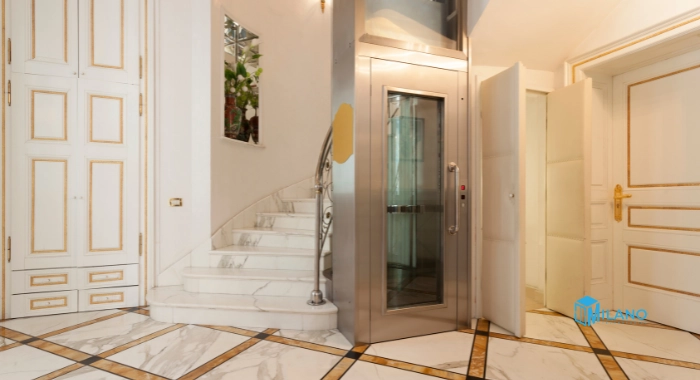
A home lift is a self-contained vertical transport system with an enclosed cabin that travels inside a shaft between floors. The user enters the cabin on one floor, the doors close, and the cabin travels vertically to the destination floor where the doors open again. It functions exactly like a small version of the elevators found in commercial buildings, engineered and safety certified for residential use.
The American Society of Mechanical Engineers ASME A17.1 code governs residential elevator safety standards globally, covering load testing, safety gear, door interlocks and emergency rescue requirements. Stair lifts are governed by a separate standard, BS EN 81-40, published by the British Standards Institution, which covers stair lift safety requirements including seat belt specifications, obstruction sensors and speed limits. The two products exist in entirely separate safety and engineering categories, which is the first indication that they are not interchangeable solutions.
Who Can Use Each System: The Mobility Difference That Changes Everything
This is the comparison point that most Pakistani families underestimate until they are living with the consequences of a wrong choice.
A stair lift requires the user to walk to the chair at the bottom of the stairs, sit down safely, operate the controls, ride to the top, stand up from the chair at the top, and walk away from the landing. For someone with mild mobility reduction, manageable knee pain or general age-related slowness on stairs, this sequence is comfortable and practical. For someone with significant mobility impairment, balance problems, severe arthritis in the hips or knees, or any condition affecting their ability to stand and transfer independently, the sit down and stand up sequence at both ends of the stair lift journey is the most difficult and risky part of the whole exercise.
The World Health Organization’s global report on ageing and health identifies transfer movements, meaning the act of moving from standing to seated and back, as one of the highest risk moments for falls among elderly adults. A stair lift requires two such transfers per journey. A home lift requires none. The user walks in, stands or sits on a fold-down seat, and walks out at the destination floor without any transfer movement.
For Pakistani families with elderly parents or grandparents living in the home, this distinction is not academic. It is the practical difference between a solution that genuinely solves the mobility problem and one that moves the risk from the stairs to the chair transfers.
A home lift also accommodates wheelchair users, which a stair lift cannot. A wheelchair user cannot transfer to a stair lift chair independently in most cases, and even where assisted transfer is possible, the wheelchair remains on one floor while the user travels to another, defeating the purpose. A correctly specified home lift cabin accepts a wheelchair, meaning a wheelchair user gains full independence across all floors of the home.
Space Requirements: The Constraint That Surprises Pakistani Homeowners
Space is often cited as the reason families choose a stair lift over a home lift, on the assumption that a stair lift takes no space while a home lift requires a significant structural addition. Both assumptions are partially wrong.
A stair lift rail occupies the width of the staircase alongside the steps. In a typical Pakistani home staircase of 900mm to 1,000mm width, the stair lift rail and chair reduce the usable staircase width to approximately 500mm to 600mm when the chair is parked. This is adequate for one person to pass but makes carrying items up the stairs, moving furniture or two people passing on the staircase simultaneously difficult or impossible. In a Pakistani family home with multiple daily users on the staircase, a parked stair lift chair changes how the staircase functions for everyone, not just the person using the lift.
A home lift requires a shaft footprint of approximately 1.2 metres by 1.3 metres for a compact model, which is under 17 square feet per floor. In most Pakistani homes this space comes from the staircase void, a rear corner or an adjacent wall position, and the shaft stacks vertically so it occupies the same footprint on every floor rather than reducing a different space on each level.
According to the National Association of Elevator Contractors, compact residential elevator installations in existing homes regularly achieve installation without structural alterations to primary living spaces, using the same shaft-positioning strategies described above. The space argument for stair lifts over home lifts is less clear-cut than it appears at first consideration.
Head to Head Comparison: Every Factor Pakistani Families Must Weigh
| Factor | Home Lift | Stair Lift | Better Choice |
|---|---|---|---|
| Who can use it | Anyone including wheelchair users | Ambulatory users who can transfer | Home lift |
| Transfer risk for elderly | None, walk in and walk out | Two transfers per journey | Home lift |
| Staircase remains usable | Yes, staircase untouched | Reduced width when chair parked | Home lift |
| Wheelchair accessible | Yes | No | Home lift |
| Carrying items between floors | Yes, hands free inside cabin | No, user’s hands hold the chair | Home lift |
| Installation disruption | Shaft required, 7 to 21 days | Rail fixed to stairs, 1 to 2 days | Stair lift |
| Works during load shedding | ARD brings cabin to floor safely | Battery backup continues operation | Both with backup |
| Curved staircases | Not applicable, shaft based | Custom curved rail available | Stair lift |
| Property value impact | Positive, adds permanent value | Neutral to minor, removable unit | Home lift |
| Multi-floor coverage | All floors in one system | One staircase per unit | Home lift |
| Maintenance requirement | Annual professional service | Annual rail and motor check | Comparable |
| Guest perception | Integrated, architectural feature | Visible mobility aid on stairs | Home lift |
The Load Shedding Test: How Both Systems Handle Pakistan’s Power Reality
Every mobility solution in a Pakistani home must be evaluated against load shedding, because a device that stops working when the power cuts is not a reliable solution in a country where outages remain a daily reality in most cities.
A stair lift runs on a battery that charges from the mains supply when power is available. Most modern stair lift models can complete several journeys on battery alone before the charge depletes, meaning short outages do not interrupt operation. The limitation is extended outages, where the battery eventually discharges and the lift stops mid-rail if the timing is unfortunate.
A home lift handles load shedding through a different mechanism. Every KOYO home lift includes an Automatic Rescue Device as a standard safety feature, not an optional extra. The ARD detects a power failure, uses its dedicated battery to move the cabin gently to the nearest floor, and opens the doors so the passenger can exit safely. This is not the same as the stair lift’s operational battery. The ARD is specifically engineered for the rescue function, tested as a safety device under the ASME A17.1 code, and designed to function even after a period of power failure rather than simply continuing normal operation until the battery drains.
For full continued operation through longer outages, a home UPS or generator sized to the lift’s startup current extends operation through load shedding indefinitely, which the Elevator Escalator Safety Foundation identifies as the recommended backup configuration for residential elevators in markets with unreliable grid supply.
The Multi-Generational Home Advantage: Why Pakistani Families Choose Home Lifts
Pakistan’s joint family system creates a household dynamic that is genuinely different from the individual-user focus of most stair lift marketing. A Pakistani home may house three generations simultaneously, with grandparents, parents, children and visiting extended family all using the same staircase daily.
A stair lift installed for one elderly grandparent solves that one person’s problem while creating a narrowed staircase that everyone else navigates around for years. When a second family member develops mobility needs, a second stair lift unit on the same staircase is often impractical.
A home lift installed for one family member is immediately available to every other family member. The grandmother who cannot climb stairs uses it as a mobility aid. The father recovering from knee surgery uses it during rehabilitation. The mother carrying groceries from the ground floor kitchen uses it as a convenience. Visitors with any mobility limitation can use it without asking for assistance. The home becomes more accessible for everyone, permanently, from one installation decision.
This multi-user value is a specifically Pakistani consideration that global stair lift versus home lift comparisons rarely address, because the multi-generational joint family home is not the dominant housing model in the markets where most of this content is written.
Property Value: What Each Choice Does to Your Home’s Resale Position
This is the long-term financial dimension that most families do not consider when making what feels like a mobility decision rather than a property decision.
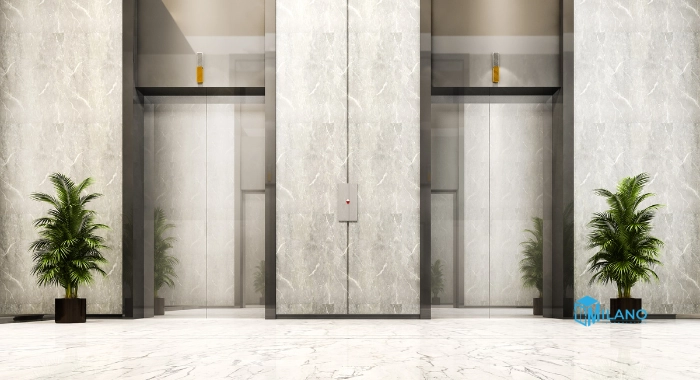
A home lift is a permanent architectural feature of the building. It is listed as a facility in property descriptions, it signals a premium specification to buyers, and in Pakistan’s upper-mid and premium residential segments it is increasingly expected rather than exceptional in larger homes. A properly installed home lift adds to the assessed value of a property in the same way that an additional bathroom or a fitted kitchen does.
A stair lift is a removable mobility aid. It adds no structural value to the property, and many buyers in the resale market view a stair lift as a signal of mobility-related wear on the home rather than an added feature. When the original user no longer needs it, the stair lift is typically removed, leaving behind a rail mounting that requires cosmetic repair.
According to Zameen.com property market analysis, home features that signal accessibility and modern specification positively influence buyer decisions in DHA, Bahria Town and comparable premium schemes, where buyers are increasingly evaluating homes against international standards of residential quality.
Which One Is Right for Your Family in Pakistan?
The honest summary is that a stair lift suits a specific, narrow use case: a single user with mild to moderate mobility reduction who can transfer safely to and from a seated position, in a home where the staircase is wide enough to accommodate the rail without significantly disrupting daily use, and where budget or structural constraints make a shaft installation genuinely impractical.
For every other situation, a home lift is the better long-term decision. It serves more users, imposes no restrictions on who can use the staircase, accommodates wheelchairs, carries items between floors, adds property value, and handles Pakistan’s load shedding through a safety-certified rescue system rather than a general-purpose battery.
Talk to an Engineer About the Right Solution for Your Home
The right choice between a home lift and a stair lift depends on your staircase, your household, the mobility needs of the person being helped and the long-term direction of your home. Milano Technologies installs KOYO home lifts across Lahore, Islamabad and Karachi and conducts a free site survey before recommending any solution.
Contact Us: Call or WhatsApp +92 347 7111104 to book your free survey, and we will give you an honest assessment of which solution suits your home rather than the one that suits our sales target.