Book Appointment Now

How to Choose the Right Elevator for Your Building in Pakistan
Most building owners in Pakistan approach elevator selection the same way they approach buying furniture. They look at price, they look at appearance, and they move on. That approach works fine for a sofa. For a vertical transportation system that will run thousands of cycles every month for the next 20 years, it produces expensive regrets.
Choosing the right elevator for your building in Pakistan is a technical decision shaped by building type, floor count, occupancy load, shaft conditions, power supply quality, and the engineering standard of the system itself. Get any one of these wrong and you either overpay for capacity you never use, or install a system that fails under the actual demand your building places on it from day one.
This guide gives you a structured decision framework built for Pakistan’s real construction environment, covering everything you need to make the right call before you sign anything.
Step 1: Match Your Elevator Type to Your Building Category
The first decision in any elevator selection is not which brand or model to buy. It is which category of elevator system your building actually requires. Installing the wrong type for your building category is the most common and costly mistake made across Pakistan’s construction sector.
| Building Type | Recommended Elevator Type | Key Reason |
|---|---|---|
| Private villa or duplex home | Home Elevator (Villa Series) | Compact shaft, minimal structural disruption, retrofit compatible |
| Residential apartment, 4 to 8 floors | MRL Passenger Elevator | No machine room overhead, saves floor area, energy efficient |
| Commercial office, 5 to 15 floors | Gearless Traction MRL | High duty cycle, smooth ride quality, lower long-term energy cost |
| Hospital or healthcare facility | Medical Elevator (dedicated series) | 3mm floor leveling accuracy, 24/7 reliability, adaptive traffic management |
| Factory, warehouse, logistics facility | Freight Elevator | Reinforced cabin, load precision engineering, heavy duty cycle rating |
| Hotel, mall, luxury lobby | Panoramic Glass Elevator | Architectural visibility, multiple cabin configurations, custom glass options |
| Mall, transit hub, or metro station | Escalator (commercial or transit grade) | Continuous high-volume flow, not point-to-point passenger trips |
Each of these is a fundamentally different engineering product, not a variation of the same system. A medical elevator that achieves 3mm floor leveling accuracy uses a different drive specification than a standard passenger elevator. A freight elevator with steel seamless joint technology is not a heavier version of a commercial lift. Matching the category correctly is the non-negotiable starting point.
Step 2: Understand Pakistan’s Building Code Requirements for Elevators
Before specifying any system, you need to know what Pakistan’s regulatory framework actually requires for your building type. This is a step that most buyers skip, and it creates compliance problems after construction is complete.
The Pakistan Engineering Council (PEC) and the Building Code of Pakistan 2021 govern structural and safety requirements for multi-storey buildings, including provisions for vertical transportation. Key regulatory points every building owner must understand:
Multi-storey commercial buildings are required to provide accessible vertical transportation under ICT and provincial building control authority regulations. Residential buildings of four or more floors in gated communities including DHA and Bahria Town are increasingly subject to developer-imposed elevator specifications as contractual obligations. Cantonment Board buildings in Karachi, Lahore, and Rawalpindi follow a separate permit jurisdiction from SBCA and CDA regulated buildings, which affects the approval process for elevator installation.
For gated community developments, local authority requirements should be confirmed before specifying a system, because developer contracts sometimes mandate specific elevator performance standards that override general market choices.

Step 3: Calculate Your Traffic Load Before Selecting Capacity
One of the most technically overlooked steps when building owners choose an elevator in Pakistan is traffic load calculation. Buying an 8-person capacity elevator for a 12-floor office building with 200 occupants is not a saving. It is a specification error that produces overcrowded elevators, extended waiting times, and accelerated mechanical wear from constant overloading.
The international benchmark for elevator traffic performance, established in CIBSE Guide D: Transportation Systems in Buildings, sets the following waiting time standards by building type:
| Building Type | Acceptable Maximum Wait Time | Handling Capacity Standard |
|---|---|---|
| Commercial office building | 25 to 30 seconds | 12 to 15% of building population per 5 minutes |
| Residential apartment tower | 60 seconds | 8% of building population per 5 minutes |
| Hospital or healthcare | Less than 30 seconds | Continuous availability, no peak tolerance |
| Hotel | 30 to 40 seconds | Based on room count and check-in/out peak patterns |
For office buildings, the primary performance criteria specify that the system should achieve a handling capacity of at least 12 to 15% of the building’s population per five minutes during peak periods, and that average waiting times should not exceed 25 to 30 seconds for standard-quality systems. Milano Technologies
For Pakistan’s commercial buildings specifically, the standard guidance is that a passenger elevator should transport users from the bottom to the top floor in no more than 30 seconds of travel time. Speed is therefore a direct function of building height, not an optional upgrade. A 15-floor commercial tower in Islamabad’s Blue Area running a 1.0 m/s elevator will produce waiting complaints regardless of how good the cabin finish is.
Reference: Elevator Traffic Analysis Fundamentals, Elevator World
Step 4: Choose the Right Drive System for Pakistan’s Power Conditions
Pakistan’s power supply presents specific challenges that directly affect which drive system is appropriate for your building. Electricity at the commercial rate currently sits at approximately Rs. 39 to Rs. 65 per unit depending on consumption slab, meaning drive system efficiency has a measurable impact on operating cost over the life of any building.
Elevator control systems designed for optimal energy use during standby periods reduce consumption by gradually powering down car lights, direction indicators, door controllers, and inverter fans when the elevator is idle, with full reactivation taking approximately 30 seconds. Koyocn
Beyond energy efficiency, Pakistan’s voltage fluctuation environment makes the drive system specification a safety and durability issue, not just a running cost question.
| Drive System | Best Application | Pakistan-Specific Consideration |
|---|---|---|
| VVVF Gearless Traction | Mid-rise and high-rise commercial and residential | Handles voltage fluctuations, reduces motor wear, lower long-term energy cost |
| Hydraulic | Low-rise 2 to 4 floors | Higher energy consumption, requires machine room, not suitable for areas with poor power quality |
| MRL Gearless Traction | New construction, space-constrained floor plates | Eliminates machine room overhead, best choice for most new DHA and Bahria developments |
| ARD (Automatic Rescue Device) | Any building in load-shedding zones | Brings elevator to nearest floor safely during power cut, non-negotiable for occupied buildings |
VVVF (Variable Voltage Variable Frequency) drive technology adjusts motor output in real time to match actual load and speed demand. This reduces energy consumption per trip and provides inherent protection against the voltage spikes and drops that regularly occur across Pakistan’s electricity grid. For any building in Lahore, Karachi, or Islamabad that will use the elevator daily, VVVF is the minimum drive specification worth specifying.
An Automatic Rescue Device (ARD) is not optional for buildings in Pakistan’s load-shedding zones. It activates on battery power during an outage and brings the elevator to the nearest floor to release passengers, preventing the trapped-passenger incidents that occur without it.
Step 5: Verify International Safety Certifications Before Signing Anything
The elevator certification question in Pakistan is where most buyers make their most consequential mistake. Company registration certificates and local compliance paperwork are not the same as internationally verified product safety certifications.
The two certifications that matter for any elevator system sold in Pakistan are ISO compliance and CE marking. EN-ISO 8100-1 and EN-ISO 8100-2 are now the primary international standards for lift design, construction, and safety, replacing EN 81-20 and EN 81-50, and covering safety architecture, structural, operational, and digital aspects of lift design and performance across the full installation lifecycle.
Ask for these specific documents before any contract is signed:
- ISO 9001 certificate for the installing company’s quality management system
- CE marking declaration of conformity for the specific elevator model being supplied
- ISO 8100 compliance documentation for the product series
- Load test and commissioning certificate upon installation completion
A supplier that cannot produce items one through three before contract signing is not operating to international engineering standards, regardless of what the sales presentation says.
Reference: ISO 8100 Standards Development, Liftinstituut
Step 6: Plan the Shaft Before the Building Goes Up
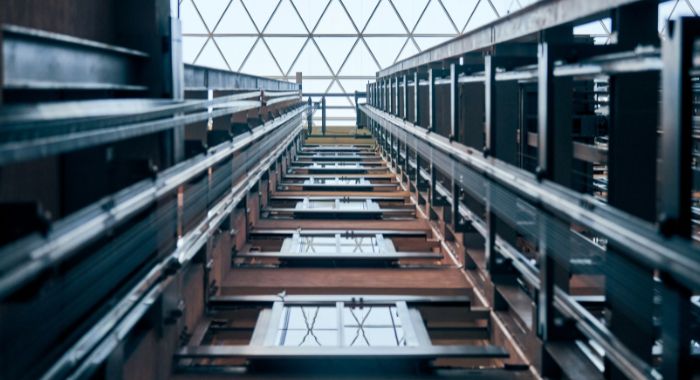
The most expensive line item in any elevator project that was not planned correctly from the start is the retrofit shaft. When an elevator shaft is added to a structure that was not designed to accommodate it, civil teams must excavate completed floors, cut through finished walls, and reinforce structures that were never intended to carry shaft loads. That scope consistently adds significant cost and weeks of delay to what should have been a straightforward installation.
The correct sequence for any new building in Pakistan is:
First, select the elevator system and series before the structural drawings are finalised. Second, obtain the shaft civil specifications from your elevator supplier and give them to your structural engineer before any slabs are poured. Third, confirm pit depth, overhead clearance, shaft internal dimensions, and the three-phase electrical supply point with your civil and electrical contractors during the main construction phase. Fourth, order the elevator equipment once the shaft dimensions are verified as correct.
This sequence costs nothing extra and saves the rework budget that retrofit projects consistently consume.
The KOYO Advantage: Why System Choice Matters as Much as Process
Following the six steps above tells you what to specify. But the quality of that specification is only as good as the system that delivers it.
KOYO elevator systems, supplied and installed in Pakistan exclusively by Milano Technologies, are engineered to the international standards that every step above references. VVVF drive technology is standard across the passenger range, not an optional upgrade. Medical elevator floor leveling accuracy of 3mm is a base specification, not a premium feature. The full product range covers every building category in the table at the top of this guide, from compact villa home elevators to heavy-duty industrial freight systems to public transit escalators for metro interchanges.
KOYO’s international installation record across 120 countries including LaGuardia Airport in New York, the Paris Metro, and Milan International Airport reflects the same engineering standard that every KOYO system installed in Pakistan is built to meet.
Milano Technologies operates permanent engineering offices in Lahore, Islamabad, and Karachi, covering the complete project process from free site assessment and civil specification through to certified installation, load testing, and long-term annual maintenance under a single accountable contract.
Contact Milano Technologies for a free site assessment and custom elevator specification for your building.