Book Appointment Now

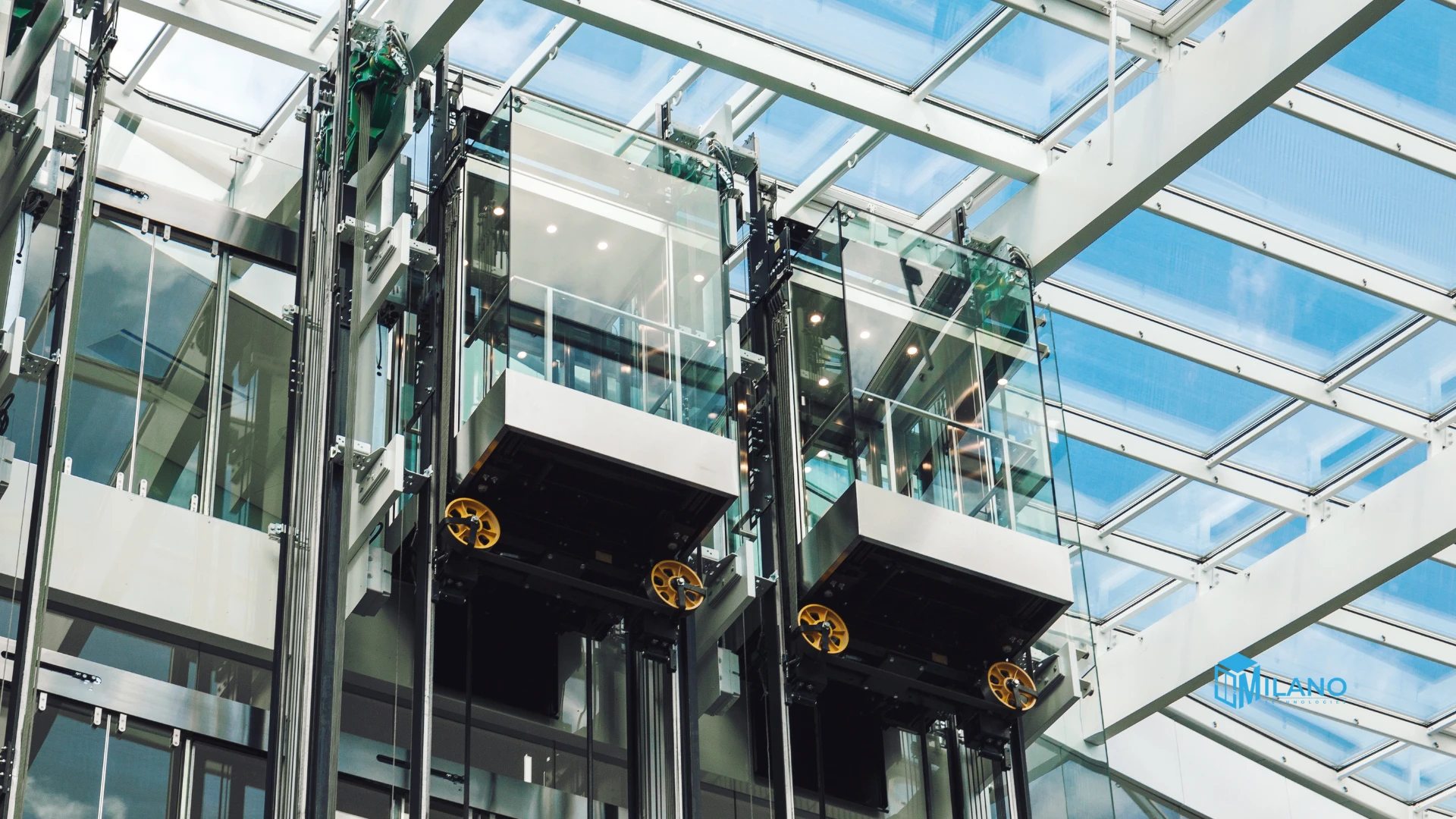
Glass Elevator Pakistan: Panoramic Lift & Design Options
A glass elevator Pakistan does two things simultaneously that no other elevator type can: it moves people vertically and changes how a building feels from the moment you walk inside. Hotels in Karachi, luxury commercial towers in Lahore, shopping malls in Islamabad, and premium mixed-use developments across Pakistan are all discovering this. The question is not whether a glass elevator is the right choice for a premium building. The question is which design, which glass specification, and which system is correct for your specific building, application, and environment.
This guide covers everything a building owner, developer, or architect in Pakistan needs to know before specifying a glass elevator, from structural glazing standards and cabin configurations to KOYO’s panoramic elevator range and what actually determines the cost of a correctly specified system.
What Makes a Glass Elevator Pakistan Different Fom a Standard Lift
A glass elevator, also called a panoramic elevator or sightseeing elevator, is not simply a standard lift with glass panels swapped in. The structural, mechanical, and aesthetic requirements of a glass cabin create an entirely different engineering brief.
The cabin walls in a panoramic elevator are load-bearing glass panels, not decorative surfaces. Panoramic traction elevator cabins use tempered glass that is up to five times stronger than standard glass, laminated with a polyvinyl butyral (PVB) interlayer so that fragments remain bonded in place if the panel cracks. This is not an optional upgrade. It is the minimum safety specification for any glass elevator cabin that meets international building code requirements.
The International Building Code specifies that glass used in elevator car enclosures and elevator car doors shall be laminated glass conforming to Class A in accordance with ANSI Z97.1 or Category II in accordance with CPSC 16 CFR Part 1201. Tempered glass is permitted for lining walls and ceilings only when bonded to a nonpolymeric backing with the physical integrity to retain fragments on breakage.
The structural frame supporting those glass panels is equally critical. While the appearance of a glass elevator may suggest an all-glass structure, there is a stainless steel or aluminum alloy frame backbone providing corrosion resistance and the rigidity needed to support large curved glass panels safely.
This matters practically for buyers in Pakistan because it means a glass elevator cabin must be specified and certified to these structural standards, not simply ordered as a design preference.
Glass Types Used in Panoramic Elevators: What You Are Actually Buying
Most buyers in Pakistan asking about glass elevators Pakistan do not know that the type of glass used in the cabin directly determines the safety performance, visual clarity, weight, and long-term durability of the system. This table breaks down the three glass types used in panoramic elevator cabins and what each delivers.
| Glass Type | Construction | Safety Performance | Pakistan Application Note |
|---|---|---|---|
| Tempered Safety Glass | Single layer, heat-treated to 5x standard strength | Shatters into blunt fragments on impact | Suitable for internal cabin wall linings in protected indoor installations |
| Laminated Tempered Glass (PVB interlayer) | Two tempered glass layers bonded with polyvinyl butyral | Fragments stay bonded to interlayer on breakage | Standard minimum for cabin enclosures per IBC and EN81-20 requirements |
| Laminated Glass with SGP/Ionoplast Interlayer | Two glass layers bonded with structural ionoplast | Significantly higher stiffness and post-breakage structural integrity | Recommended for outdoor panoramic elevators in Pakistan’s coastal zones |
Ionoplast interlayers such as SentryGlas are significantly stiffer and stronger than PVB, making them the preferred choice for applications requiring higher structural performance and long-term exterior stability in exposed environments.
For glass elevators installed in Karachi’s coastal commercial buildings along Clifton or DHA’s sea-facing developments, the salt-air environment accelerates frame corrosion and interlayer degradation in standard PVB laminated panels. Specifying laminated glass with an ionoplast interlayer and a stainless steel cabin frame is the correct specification for these environments, not a premium option.
KOYO Panoramic Elevator Range: Four Cabin Configurations for Pakistan’s Buildings
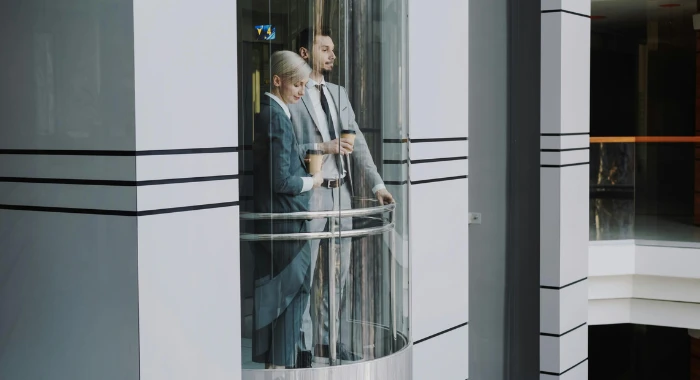
KOYO’s TGJ series sightseeing elevator with machine room and TGJW Series sightseeing elevator without machine room can meet the requirements for square, diamond, round, or semi-round sightseeing configurations, applicable to shopping malls, CBD developments, and hotels. The system can realize sightseeing in four directions at most.
This is the most important technical distinction that separates KOYO’s panoramic elevator from most alternatives available in Pakistan: the cabin shape is not a fixed catalogue choice. It is an engineering configuration matched to the building’s architectural design, structural conditions, and aesthetic requirements.
| KOYO Panoramic Series | Configuration | Machine Room | Best Application in Pakistan |
|---|---|---|---|
| TGJ Series | Square, diamond, round, semi-round | Yes (MR) | High-rise commercial towers, CBD developments, Islamabad Blue Area |
| TGJW Series | Square, diamond, round, semi-round | No (MRL) | Space-constrained new construction, DHA and Bahria Town developments |
| Custom configurations | Architect-specified shapes | Both options | Luxury hotels, flagship retail, premium hospitality lobbies |
The TGJW machine room-less configuration is particularly relevant for Pakistan’s new construction landscape. Eliminating the machine room overhead reduces civil construction costs and gives architects full control over the roofline and upper floor design without the structural constraint of a dedicated mechanical space.
KOYO’s manufacturing process strictly follows CCC, GB, VDI, EN81, EN115, CE, and TUV standards, and the company holds ISO 9001 quality management, ISO 14001 environmental management, and OHSAS 18001 occupational health and safety certifications.
This is the certification standard behind every KOYO panoramic elevator installed in Pakistan by Milano Technologies.
Reference: KOYO Panoramic Elevator Product Page, koyocn.com
Where Glass Elevators Work Best in Pakistan’s Built Environment
Not every building is the right candidate for a glass elevator. The decision should be driven by architectural intent, occupancy type, and structural suitability, not just aesthetic preference.
- Luxury Hotels and Hospitality Venues. The atrium lobby of a hotel is the single most impactful location for a glass elevator in Pakistan’s commercial hospitality sector. Karachi and Lahore’s premium hotel developments use panoramic lifts as lobby focal points, turning the movement of guests between floors into part of the visual experience of the building. KOYO’s TGJ series, with its four-directional sightseeing capability, delivers maximum visual coverage in double-height atrium configurations.
- Shopping Malls and Retail Environments. A glass elevator in a multi-level mall does something a conventional lift cannot: it keeps shoppers visually engaged with retail floors while they travel between levels. That visual engagement is a commercial asset for the development, not just an architectural detail. For high-footfall retail environments in Lahore’s commercial zones or Karachi’s mall corridors, the TGJW MRL configuration is the preferred specification because it eliminates the machine room overhead and allows the elevator to be positioned as a freestanding architectural feature within the mall atrium.
- Premium Residential Towers and Luxury Villas. For residential applications, glass elevators serve a different function. In a private DHA villa or a high-end apartment development in Bahria Town, a panoramic home elevator adds property value and transforms an internal vertical movement into a design feature. The compact TGJW MRL configuration is well suited to residential applications where the glass shaft can be positioned against an internal atrium wall without requiring significant structural modification.
- Corporate Offices and Commercial Plazas. Progressive commercial developments in Islamabad’s F-sector and Lahore’s Gulberg corridor increasingly specify panoramic elevators for lobbies and reception areas as part of their tenant attraction strategy. A glass elevator in a commercial lobby communicates a standard of building quality that directly affects leasing perception.
What Determines the Cost of a Glass Elevator in Pakistan
Milano Technologies does not publish standard price lists for panoramic elevator installations because no two projects have the same cabin configuration, shaft conditions, floor count, glass specification, or civil requirements. Every KOYO glass elevator installation in Pakistan is quoted individually based on the specific requirements of that building and that system.
The variables that directly affect your project cost:
| Cost Factor | What It Affects |
|---|---|
| Cabin shape and size | Round and diamond configurations require custom glass molds and higher fabrication cost than square |
| Glass specification | Laminated PVB vs ionoplast interlayer carries different cost; coastal buildings need the latter |
| Indoor vs outdoor installation | Outdoor panoramic elevators require weatherproof enclosures, sealed motors, UV-resistant glass coatings |
| Number of floors and rise height | Determines traction system specification, motor size, and rail length |
| MR vs MRL configuration | Machine room-less adds drive system integration cost but eliminates civil machine room construction |
| Custom architectural features | LED lighting integration, branded glass treatment, custom frame finish |
| Shaft construction scope | Whether a shaft exists and is correctly dimensioned, or requires civil construction from scratch |
After completing a free site assessment, Milano provides a fully itemized written quote with no additions after signing.
What to Verify Before Ordering a Glass Elevator in Pakistan
These four checks protect your investment and expose whether a supplier is delivering a certified system or assembled components with a premium price:
First, ask for the glass certification. The cabin glass should carry laminated safety glass certification to ANSI Z97.1 Class A or equivalent EN81-20 specification. A supplier that cannot provide this documentation is not supplying a code-compliant glass cabin.
Second, confirm the cabin frame material. Stainless steel or aluminum alloy frames are the correct specification. Painted mild steel frames corrode in Pakistan’s humidity and, in coastal areas, fail significantly faster than the elevator system around them.
Third, verify the drive system certification. Every KOYO panoramic elevator carries CE marking and ISO 9001 compliance documentation. Ask for both before signing.
Fourth, confirm post-installation maintenance coverage. A glass elevator Pakistan cabin requires periodic glass panel inspection, frame seal checks, and drive system servicing. The AMC must cover all of these under a single contract with written response times.
Milano Technologies: Authorized KOYO Panoramic Elevator Installer in Pakistan
Milano Technologies installs the complete KOYO panoramic elevator range (TGJ and TGJW series) across Lahore, Islamabad, and Karachi. Every installation follows the complete Milano process: free site assessment, architectural consultation on cabin configuration, civil specification, certified installation, glass and safety system commissioning, and long-term AMC maintenance by permanently based local engineering teams.
Whether you are specifying a panoramic lift for a hotel in Karachi, a luxury mall in Lahore, or a premium villa in DHA Islamabad, the starting point is a site assessment that gives you the correct cabin configuration, glass specification, and project cost before any commitment is made.
Milano Technologies Lahore: 55-N, Gulberg-2 | Islamabad: Office 7, I-9/3 Industrial Area | Karachi: Plot A-508/1, Mehran Town, Korangi 📞 +92 347-711-1104 | ✉ info@milano.pk