Book Appointment Now

Hydraulic vs Traction Elevator: The Honest Comparison
Every building owner in Pakistan eventually faces the same decision. The elevator company has quoted two options, both apparently capable of doing the same job, and the technical explanation they received lasted thirty seconds before ending with “it depends on your building.”
That answer is technically correct. But you deserve to understand why it depends, because the wrong choice between a hydraulic and a traction elevator is not just a preference mismatch. It is a decision that affects your energy bills, your maintenance schedule, your building’s resale value and the daily experience of every person who uses that lift for the next twenty years.
This is the comparison nobody in Pakistan has written properly. Not a brochure summary, but a real engineering breakdown of how both systems work, where each one wins, where each one fails, and which specific building types in Pakistan should choose which system without hesitation.
How a Hydraulic Elevator Actually Works
A hydraulic elevator moves using fluid pressure. An electric pump pushes hydraulic oil into a cylinder, which extends and pushes the cabin upward. To descend, a valve releases the oil back into the reservoir and gravity does the rest.
The mechanical simplicity of this is its greatest strength. There are no ropes, no counterweight and no overhead machinery. The pump and oil reservoir sit in a small machine room at ground level or basement level, which is often easier to accommodate than a rooftop machine room in certain building types.
The Fluid Power Society defines hydraulic systems as particularly suited to applications requiring high force at low speed, which maps directly to the elevator use case of lifting heavy loads across a short distance. For two to four stop applications, hydraulic drive is a genuinely appropriate engineering choice, not a compromise.
Where it fails is at height. Hydraulic systems are limited in practical travel distance because the cylinder length, oil pressure requirements and heat generated by repeated pump cycles all become problematic beyond three to four stops. They also consume significantly more electricity than traction systems because the pump works against gravity on every upward journey with no energy recovery mechanism.
How a Traction Elevator Actually Works
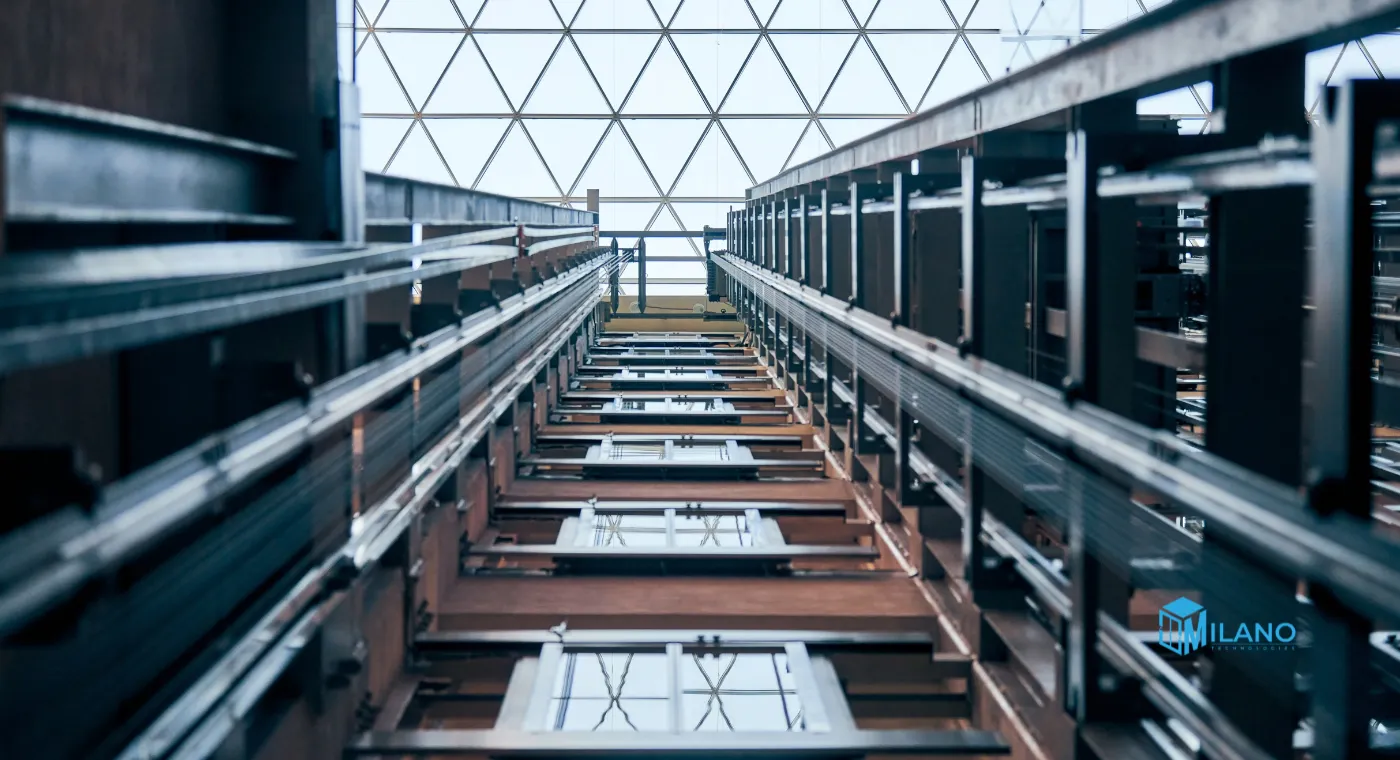
A traction elevator moves using steel ropes or belts wrapped around a grooved sheave driven by an electric motor. A counterweight on the opposite end of the ropes balances a significant portion of the cabin’s weight, so the motor only needs to overcome the difference between cabin load and counterweight mass rather than lifting the full weight from scratch.
This counterweight principle is the key engineering advantage of traction. According to the American Society of Mechanical Engineers, a properly balanced traction system can achieve energy savings of 30 to 40 percent compared to hydraulic systems on equivalent journeys, because the counterweight does a significant share of the work on every trip.
Gearless traction, which removes the gearbox from the drive chain entirely, refines this further. The motor connects directly to the sheave, eliminating gear friction losses and producing a smoother, quieter ride with lower maintenance requirements. Gearless traction is the technology behind the fastest and most reliable elevators operating in commercial buildings worldwide, and it is the correct specification for any building above four floors in Pakistan.
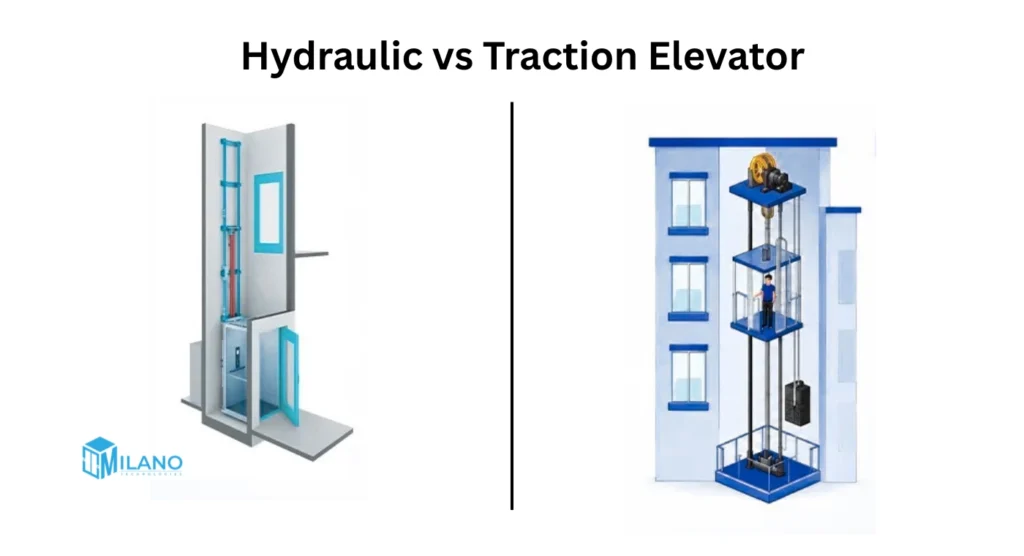
The Core Differences: A Direct Comparison
| Factor | Hydraulic Elevator | Traction Elevator | Winner |
|---|---|---|---|
| Maximum practical floors | 3 to 4 stops | 2 to 50+ floors | Traction |
| Ride quality | Smooth but slower | Smooth and faster | Traction |
| Energy consumption | Higher, no recovery | Lower, regenerative options | Traction |
| Machine room location | Ground or basement level | Rooftop or MRL (none) | Depends on building |
| Maintenance frequency | Oil checks, pump service | Rope inspection, brake service | Comparable |
| Environmental risk | Oil leak risk in soil | No fluid, cleaner | Traction |
| Best application | Low rise, heavy loads | Mid to high rise, frequent use | By building type |
| Speed | Up to 0.63 m/s typically | Up to 10 m/s for commercial | Traction |
| Load capacity | Very high (goods lifts) | Standard to very high | Comparable |
Where Hydraulic Elevators Win in Pakistan
Hydraulic systems are not outdated technology. They are the correct choice for specific applications that exist in Pakistani buildings, and specifying a traction system where hydraulic is appropriate does not make the building better, it makes it more expensive without benefit.
- Low-rise residential homes of two to three stops are the natural home for hydraulic technology. A ground floor to first floor home lift carrying two to three people on a dozen journeys per day does not need the speed, energy recovery or rope system of a traction drive. A hydraulic system handles this workload with mechanical simplicity and a lower initial specification complexity.
- Goods and cargo lifts with very heavy loads benefit from hydraulic drive because the fluid pressure system can generate exceptional lifting force with a mechanically straightforward setup. Industrial facilities, warehouses and large commercial kitchens in Pakistan that need to move heavy equipment or bulk goods between floors often find hydraulic drive better matched to the load requirement.
- Buildings with no viable rooftop space for a machine room historically used hydraulic systems to avoid the rooftop requirement. However, MRL traction has largely resolved this constraint for residential buildings, so this advantage is narrower than it once was.
The one Pakistan-specific concern with hydraulic systems is oil. Hydraulic elevators use oil that must be stored, pumped and eventually disposed of. In Pakistan, where environmental disposal regulations are still developing, oil leaks from aged hydraulic systems have caused contamination in building foundations. This is not a reason to avoid hydraulic systems in appropriate applications, but it is a maintenance responsibility that building owners must take seriously.
Where Traction Elevators Win in Pakistan
For the majority of buildings where elevators are installed in Pakistan, traction is the correct system. The reasons are specific to how Pakistani buildings are built and used.
- Multi-storey residential buildings of four floors and above require traction because hydraulic systems cannot efficiently serve this height. A six-storey apartment building in DHA Karachi or a four-storey plaza in Gulberg Lahore that installs a hydraulic system will see energy costs, maintenance demands and ride quality degradation that a traction system avoids entirely.
- Commercial buildings with frequent use benefit from traction’s energy efficiency at scale. A hydraulic pump running dozens of journeys per hour generates heat that requires cooling and degrades the oil over time. A gearless traction motor with regenerative drive technology can actually return energy to the building’s electrical system during descent, a feature that leading manufacturers including KOYO Elevators incorporate in their commercial traction range.
- Buildings in Pakistan where load shedding is a daily reality are better served by traction for a specific reason. Traction systems with MRL configuration and modern variable frequency drives restart more cleanly after power restoration than hydraulic systems, whose pump motors can struggle with repeated cold starts during frequent outages. The Automatic Rescue Device on a traction system also functions efficiently on battery backup because the counterweight assists the cabin movement to the nearest floor, requiring less battery capacity than moving a full hydraulic load.
The MRL Revolution: How Traction Eliminated Its Biggest Disadvantage
Historically, the argument for hydraulic in low to mid-rise buildings rested partly on the rooftop machine room requirement of conventional traction systems. A dedicated machine room on the roof consumes space that Pakistani buildings use intensively for water tanks, solar panels, service areas and terrace development.
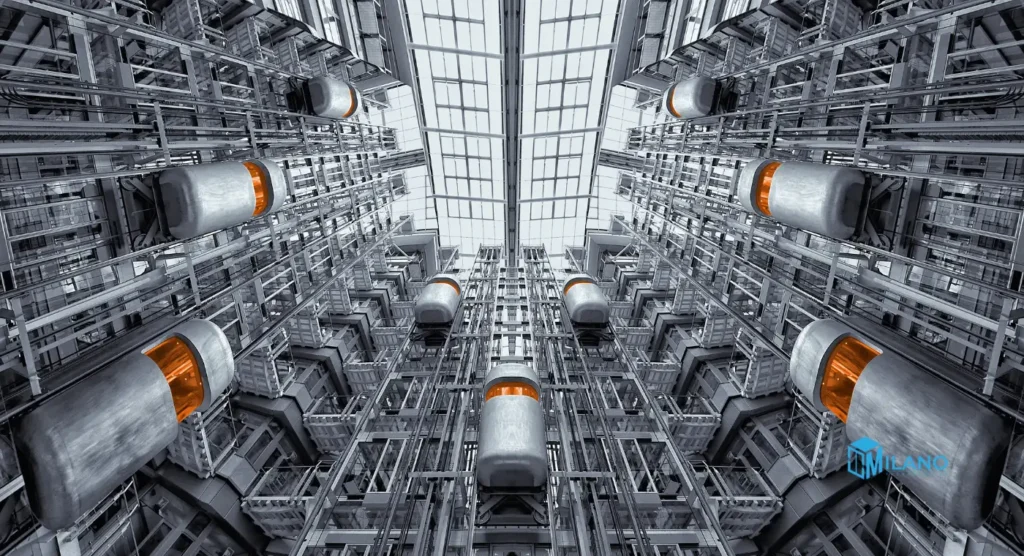
Machine Room Less traction, universally known as MRL, resolved this completely. In an MRL system, the traction drive motor and controller are housed inside the shaft itself, eliminating the machine room requirement without any compromise to ride quality, speed or safety.
The National Association of Elevator Contractors reports that MRL traction has become the dominant technology choice in new residential and mid-rise commercial installations globally, specifically because it combines the efficiency and performance of traction with the space efficiency that was previously only available from hydraulic. For Pakistan, where rooftop space is arguably more valuable per square foot than interior space in most urban homes, MRL traction is the specification that removes the last genuine advantage hydraulic held in residential applications.
Pakistan-Specific Decision Guide: Which System for Which Building
The comparison above resolves into a practical decision guide for Pakistani building types.
A two to three stop home lift in a 5 or 10 marla house with light daily use suits either system, and the choice often comes down to shaft configuration and civil work constraints. A three to six storey residential apartment building requires traction, full stop. A commercial plaza or office building of any height requires traction. A hospital with stretcher cabins and high daily trip frequency requires gearless traction for the ride quality and duty cycle. A warehouse or industrial facility needing to move very heavy loads across two floors suits hydraulic for its load capacity at low speed.
The Elevator Escalator Safety Foundation consistently identifies duty cycle, meaning the number of trips per hour a system is expected to make, as the single most important variable in system selection after floor count. For Pakistani commercial buildings, which often run lifts continuously during business hours, duty cycle analysis should be part of every equipment specification conversation.
Choose the Right System for Your Building With a Free Survey
The hydraulic versus traction decision is one our engineers make with building owners every day, and it is never the same answer twice because it depends on your floors, your usage pattern, your shaft constraints and your rooftop. Milano Technologies installs KOYO traction and MRL elevator systems across Lahore, Islamabad and Karachi, and every survey includes a clear recommendation on system type before any quote is issued.
Contact Us: Call or WhatsApp +92 347 7111104 to book your free site survey, and we will give you the honest comparison for your specific building, not a generic answer.