Book Appointment Now

I Need an Elevator for a Shopping Mall. What Specifications Should I Consider?
A shopping mall elevator is not a building accessory. It is a revenue tool, a footfall driver and a safety system all in one. Get the specifications wrong and you end up with queues at peak hours, upper floors that never fill with tenants, and a vertical transport system that costs a fortune to maintain. Get them right and your mall moves people efficiently, keeps shoppers on every floor, and operates reliably through the daily load that commercial buildings in Pakistan demand.
This guide answers the question precisely, using official KOYO specifications rather than generic estimates, and it addresses the conditions Pakistani malls face that no European or American planning guide accounts for: load shedding, voltage fluctuation, urban dust ingress, and the extreme peak loads of Eid and weekend shopping days.
Step 1: Decide Which Vertical Transport Types Your Mall Needs
Most malls need a combination of systems, not a single choice. The decision depends on your floor count, your expected footfall and which zones of the building carry the heaviest traffic.
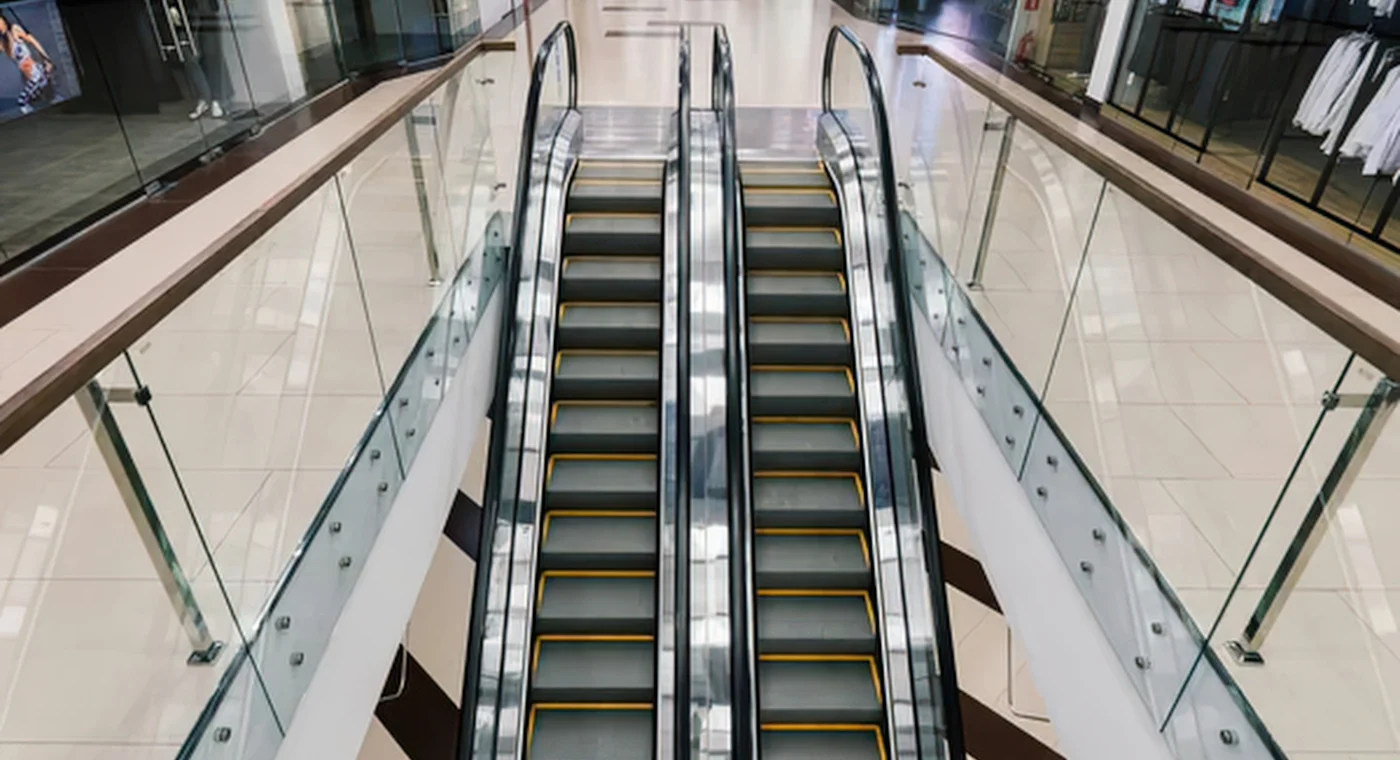
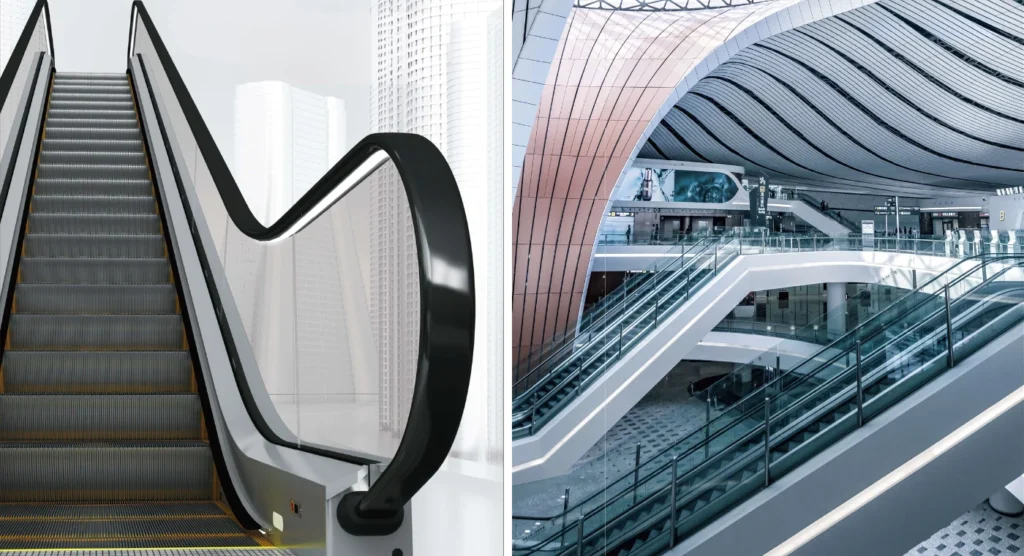
- Escalators are the primary crowd mover in retail environments. They move large volumes of shoppers continuously, keep the floor visible from every level and, when positioned correctly using a cross or parallel layout, pull foot traffic past more shopfronts. For a Pakistani mall of three or more floors, escalators are the backbone of the vertical transport plan, not an optional addition.
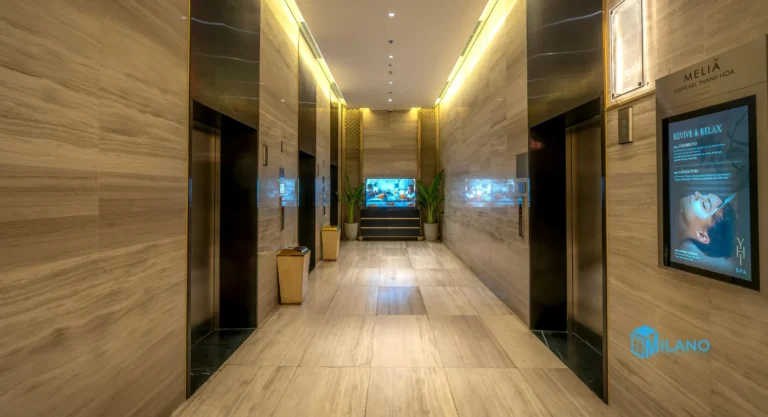
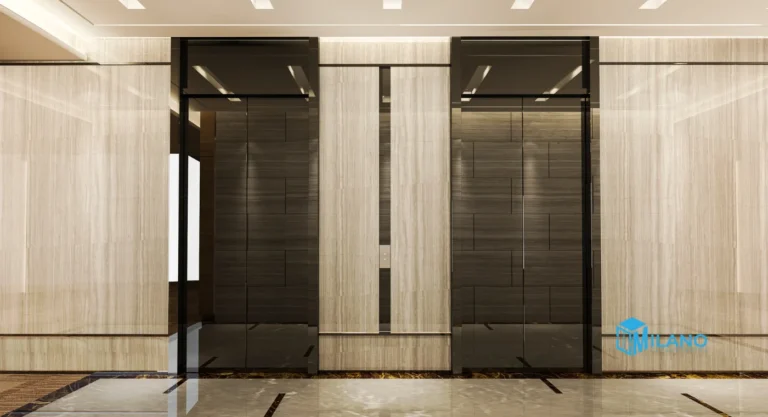
- Passenger elevators serve shoppers who cannot use escalators, parents with prams, visitors with heavy purchases and elderly family members. They are a legal and practical necessity rather than a choice. In Pakistan’s multi-generational family shopping culture, a mall without a working lift accessible from every floor loses a significant portion of its visitor demographic.
- Panoramic elevators add an architectural and commercial dimension that standard lifts cannot match. The KOYO panorama range, including the square observation model KYC-H501 and the cylindrical models KYC520 through KYC523, uses 6+6 laminated glass sightseeing panels that make the lift a visible feature of the mall’s interior. A glass elevator positioned at the centre of an atrium signals premium positioning and is itself a draw that keeps visitors in the building longer.
Step 2: KOYO Escalator Specifications for Pakistani Malls
KOYO commercial escalators comply with European standard EN115 and China national standard GB16899-2011, both of which are the reference standards cited by the International Standards Organisation for escalator safety. They carry CE, TUV and CCC certification. For a Pakistani mall developer, this matters because certified equipment arrives with a traceable safety record, not just a supplier’s claim.
Step width is the first specification decision and it determines how many shoppers the escalator can move per hour.
The KOYO commercial range offers three step widths. The 600mm model (slender type) moves a single file of passengers and suits smaller plazas or secondary internal escalators where space is the constraint. The 800mm model handles two files of pedestrians and is the minimum for any main circulation escalator in a mid-size mall. The 1000mm model carries two adults side by side with room for bags and is the correct specification for any large mall in Pakistan where weekend and Eid shopping days create crush-load conditions. The Pakistan Retailers Association consistently reports peak-day footfall figures that make 1000mm step width the only sensible choice for the primary escalators of a major mall.
Inclination angle is the second decision. KOYO commercial escalators are available in 30 degrees (KYS/C 230 series) and 35 degrees (KYS/C 235 series). The 30-degree angle is the international standard for comfort and safety and is appropriate for all public-facing retail escalators. The 35-degree option suits service areas or secondary escalators where floor space is tighter and passenger volume is lower.
Maximum travelling height for the KYS/C 230 and KYS/C 235 commercial models is 6,000mm per escalator section, which covers a typical Pakistani mall floor-to-floor height comfortably. The KYS/C 330 model extends this to 8,000mm for taller commercial structures. The KYXF and KYH public transport models reach 15,000mm for very tall or multi-rise mall structures.
Step 3: KOYO Escalator Layout | The Decision That Affects Your Mall’s Revenue
This is the specification point most Pakistani mall developers do not discuss with their escalator supplier, and it is the one that most directly affects rental income from upper floors.
KOYO escalators support four layout configurations, documented in the official catalogue: intermittent one-way layout, continuous one-way layout, cross and continuous two-way layout, and parallel and continuous two-way layout.
The cross and continuous layout, also called the crisscross or herringbone arrangement, is the standard for successful Pakistani malls. Shoppers stepping off one escalator must cross the floor to reach the next one going up. That short walk is deliberate. It exposes every visitor to the shopfronts on that floor before they continue upward, a technique retail designers call forced flow. The KOYO catalogue specifically notes that this layout is widely used in shopping malls and government institutes because it limits travel time between floors while routing shoppers through the retail floor.
The parallel layout places up and down escalators side by side, which is faster for shoppers but reduces floor exposure. It suits the secondary escalators in a food court or service area where speed is the priority rather than browsing.
Official KOYO Escalator Specification Reference Table
Specification | KYS/C 230 Commercial | KYS/C 235 Commercial | KYS/C 330 Commercial | KYXF/KYH Public Transport |
Inclination | 30 degrees | 35 degrees | 30 degrees | 30 degrees |
Max travel height | 6,000mm | 6,000mm | 8,000mm | 15,000mm |
Step widths available | 600 / 800 / 1000mm | 600 / 800 / 1000mm | 600 / 800 / 1000mm | 600 / 800 / 1000mm |
Width of pit | 1200 to 1660mm | 1200 to 1660mm | 1200 to 1660mm | 1260 to 1660mm |
Standard safety devices | 34 | 34 | 34 | 34 |
Certification | CE, TUV, CCC, EN115 | CE, TUV, CCC, EN115 | CE, TUV, CCC, EN115 | CE, TUV, CCC, EN115 |
Best application | Standard commercial mall | Space-constrained secondary | Multi-storey large mall | Airport / transit-scale mall |
Step 4: Passenger Elevator Specifications for Mall Use
Every KOYO mall passenger elevator uses a permanent magnet synchronous gearless traction machine with VVVF variable frequency control. The VVVF door control system freely adjusts the door opening and closing curve, producing a smooth, quiet operation that passengers notice and that reduces door mechanism wear under the high trip frequency a mall demands. The energy regeneration technology converts potential energy during descent back into usable electricity, reducing consumption by more than 20 percent compared to conventional systems, a real saving given commercial electricity tariffs in Pakistan.
For a mall passenger elevator, these are the specifications that matter.
- Capacity should be sized for the busiest single journey your lift will make, not the average. For a Pakistani mall where families of four to six travel together and often carry large purchases, a minimum of 1000kg (13 persons) is recommended for the main passenger lift. For a premium mall with high footfall, a 1150kg (15 person) or 1250kg (16 person) specification gives the headroom that avoids queuing at the lift lobby. From the official KOYO MRL spec sheet, an 1000kg cabin requires a shaft of 2,150mm by 1,750mm with a speed of 1.5 m/s and a pit depth of 1,050mm.
- Speed for a mall elevator should be 1.5 m/s as a minimum and 1.75 m/s for buildings above five floors. At 1.0 m/s, round-trip time in a tall building extends to the point where peak-hour queues form at the landing.
- Door type must be automatic center-opening for a mall. The KOYO standard center-opening door at 800mm by 2100mm opening size is the correct specification for all public passenger lifts. This opening allows prams, wheelchairs and shopping trolleys to enter without the cabin door dictating the loading pace.
- Infrared light-curtain door protection is standard on every KOYO passenger elevator. The system forms a dense infrared net across the door opening that detects any person or object entering or exiting and prevents the door from closing on them. In a mall environment with high passenger throughput and distracted shoppers, this is not an optional safety feature.
Step 5: The 34 Safety Devices Every Mall Escalator Must Have
KOYO escalators include 34 standard and optional safety devices, documented in the official catalogue. For a mall developer accepting an escalator installation in Pakistan, the following are the non-negotiable standard devices that must be confirmed in writing at handover.
The anti-static brush eliminates static electricity generated by running steps. The emergency stop press-button halts the escalator immediately. The skirting protection prevents objects from becoming trapped between steps and skirting panels. The handrail entrance protection stops foreign matter jamming the handrail inlet. The overspeed and underspeed monitor detects running speed deviation. The anti-reversal protection prevents the escalator from running in the wrong direction. The step sagging protection stops the unit if a step begins to deform. The functional safety protection device, known as PESSRAE, is a programmable electronic safety system certified to SIL3 level by TUV that monitors all safety inputs simultaneously and makes the escalator more safe and steady overall, as documented in the KOYO catalogue.
The alarm-bell start device activates a three-second warning alarm before the escalator starts, which is the safety requirement most commonly omitted in lower-specification installations but which is a genuine injury-prevention feature in a busy mall where shoppers may be standing near the entry point unaware of imminent movement.
According to OSHA’s guidance on escalator safety, inadequate safety device maintenance in public spaces is among the leading causes of escalator-related injuries in commercial settings. Confirming the presence and function of all 34 devices at commissioning is not a checklist exercise. It is a liability protection measure for the mall owner.
Step 6: Pakistan-Specific Specifications That No Global Guide Covers
Load shedding and backup. Every KOYO elevator includes an Automatic Rescue Device as standard. During a power failure, the ARD moves the cabin to the nearest floor and opens the doors. For escalators, the intelligent control system includes a real-time clock for power failure protection and auto-start capability through microwave or photocell sensors. For a Pakistani mall where generators are standard, the generator must be sized to handle the escalator motor’s startup current, which is significantly higher than its running current, plus all other critical loads simultaneously.
Voltage fluctuation and control board protection. The KOYO escalator control cabinet carries IP54 sealing approval and applies golden section proportioning to its heat radiating design, with upper radiating holes for heat exhaust and lower inlet holes for cool air circulation. This sealed, thermally managed cabinet handles the voltage swings common on WAPDA commercial feeders without the control board degradation that affects unsealed cabinets.
Dust management. Urban dust accumulates inside step chains, comb plates and handrail entry points faster in Pakistani cities than the maintenance manual written for European conditions assumes. KOYO escalators include automatic lubrication (device 16 in the standard safety device list) that supplies oil to the chain timely and precisely, reducing the accelerated wear that dusty environments cause. Mall operators must also specify cleaning intervals for comb plates and step channels that are tighter than the standard schedule.
Plan Your Mall’s Vertical Transport With a Free Survey
The specifications above are starting points. The right combination of escalator model, step width, layout and elevator capacity for your specific mall depends on your floor count, your architectural plan, your expected footfall and your power supply conditions. Milano Technologies installs KOYO commercial escalators and passenger elevators in malls and plazas across Lahore, Islamabad and Karachi, specifying every project from official KOYO technical data rather than catalogue estimates.
Contact Us: Call or WhatsApp +92 347 7111104 to book your free site survey, and we will give you a written specification against your actual building before any equipment is ordered.